
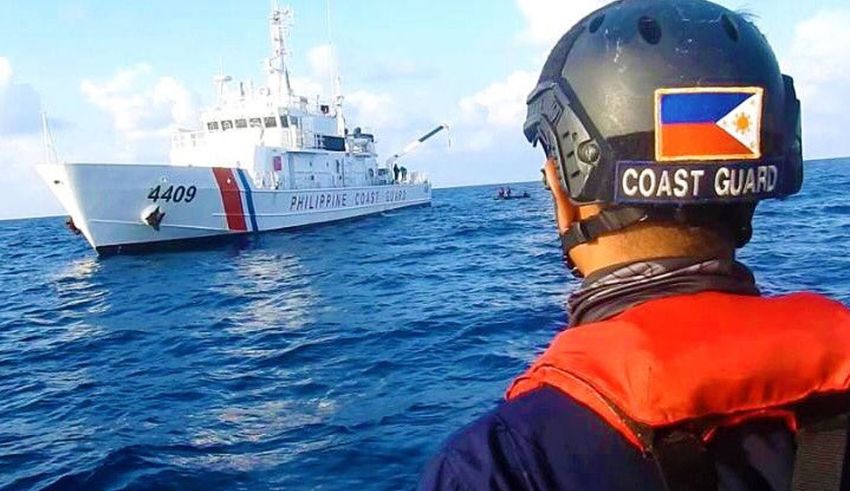
The South China Sea is a strategic and resource-rich waterway that is claimed by several countries, including China, the Philippines, Vietnam, Malaysia, Brunei, and Taiwan. China claims almost the entire sea, based on its historical rights and its nine-dash line, which was rejected by an international tribunal in 2016. The other claimants base their claims on the United Nations Convention on the Law of the Sea (UNCLOS), which grants them exclusive economic zones (EEZs) and continental shelves within 200 nautical miles from their coasts.
The dispute over the South China Sea has been a source of tension and conflict for decades, as the claimants have engaged in various actions and activities to assert and defend their interests, such as building and militarizing artificial islands, conducting naval and air patrols, and holding joint exercises with their allies and partners.
The dispute has also drawn the involvement and attention of the United States, which is not a claimant but has vital interests and obligations in the region, such as ensuring the freedom of navigation and overflight, maintaining the regional stability and security, and supporting its allies and partners.
The Alliance between the US and the Philippines
The US and the Philippines have a long-standing and strong alliance, which dates back to 1951, when they signed the Mutual Defense Treaty (MDT), which commits them to defend each other in case of an armed attack on their territories, armed forces, public vessels, or aircraft.
The alliance also includes other agreements and arrangements, such as the Visiting Forces Agreement (VFA), which allows the US to station and rotate its troops and equipment in the Philippines, and the Enhanced Defense Cooperation Agreement (EDCA), which allows the US to access and use Philippine military bases and facilities.
The alliance between the US and the Philippines is a key component of their strategy and cooperation in the South China Sea, where they share common concerns and interests, such as countering China’s assertiveness and expansionism, upholding international law and order, and protecting their sovereignty and territorial integrity.
The US and the Philippines have conducted various joint actions and activities in the South China Sea, such as conducting freedom of navigation operations (FONOPs), holding joint military exercises, providing mutual assistance and support, and issuing joint statements and declarations.
Keep Reading

The Question of the Philippines as a US Proxy
The question of whether the Philippines is a US proxy in the South China Sea is a complex and controversial one, as it involves various factors and perspectives, such as:
- The definition and criteria of a proxy, which can vary depending on the context and the purpose. A proxy can be defined as a country or a group that acts on behalf or in the interest of another country or a group, usually in exchange for some benefits or incentives. A proxy can also be seen as a country or a group that is influenced or controlled by another country or a group, usually through some means or mechanisms, such as coercion, manipulation, or dependency.
- The benefits and costs of being a proxy, which can differ depending on the situation and the outcome. Being a proxy can bring some benefits, such as receiving security guarantees, economic aid, diplomatic support, and political legitimacy from the patron country or group. Being a proxy can also entail some costs, such as losing sovereignty, autonomy, and credibility, as well as facing backlash, resentment, and isolation from the rival country or group.
- The perceptions and opinions of the actors and the observers, which can vary depending on the interests and values. The actors, such as the US, the Philippines, and China, may have different views and narratives on their roles and motivations in the South China Sea, as well as on the nature and implications of their actions and activities. The observers, such as the other claimants, the regional and global actors, and the media and the public, may also have different interpretations and evaluations on the situation and the developments in the South China Sea.
Therefore, the answer to the question of whether the Philippines is a US proxy in the South China Sea is not clear-cut or definitive, but rather subjective and debatable, depending on how one defines, measures, and assesses the concept and the reality of proxy.