









Today, July 1, 2026, the sustainable mobility landscape in Southeast Asia has significantly transformed. The Ministry of Investment, Trade and Industry (MITI) has announced further and officially toughened Malaysia EV import regulations, which is a huge structural shift for completely built up (CBU) electric vehicles.
Several car manufacturers around the world are working on a price overhaul for their vehicles or offering expedited local production in factories, but no such changes have been made for Tesla vehicles in Malaysia.
The New Reality of Malaysia EV Import Rules
As part of the strategy (which was put in place today by MITI), all fully imported CBU electric vehicles entering the country will have to pass two demanding regulatory steps to receive an approved permit:
- Minimum CIF Value: The value of Cost, Insurance and Freight (CIF) with the minimum price of RM200,000 before local taxes.
- Minimum Motor Power: 180 kW or about 245 PS/241 hp.
Cumulative import duties, excise duties, and sales and service taxes (SST) when added to that RM200,000 amount easily exceed the RM300,000 mark for on-the-road entry cost of a compliant imported EV.
This policy effectively looks at exporting foreign models, which are mass-market and affordable, with the exception that those that move to local operations can be imported.
Why Tesla Prices in Malaysia Remain Unchanged
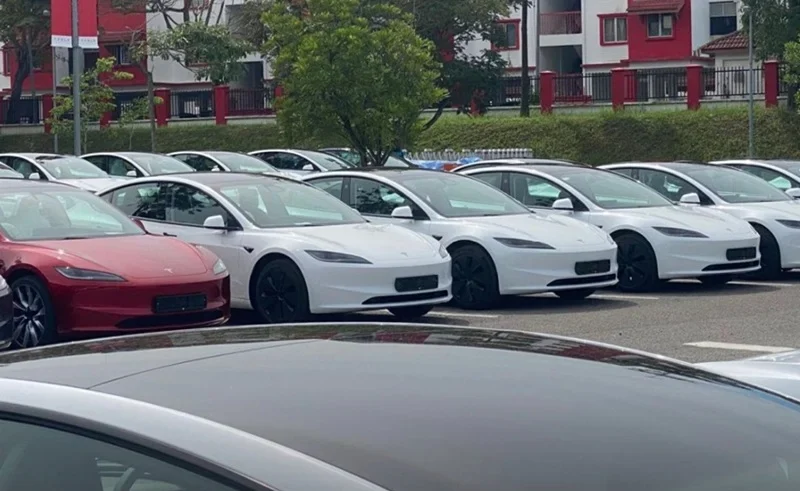
Even with the whole local team batting well below the theoretical RM300,000, Tesla Malaysia surprised the market today by keeping its retail price down to the ringgit.
Both the entry-level Model 3 Standard Rear-Wheel Drive and the base Model Y remain at their very competitive prices of RM147,600 and RM195,450 respectively.
The BEV Global Leaders Exemption
Tesla has managed to avoid the new CIF floor price and power limitation due to its special involvement in the government’s BEV Global Leaders Programme.
In return, Tesla was granted specific exemptions that are unique to the area in exchange for its localized economic benefits (such as setting up its regional headquarters in Cyberjaya, building corporate infrastructure, deploying an extensive network of Tesla-branded Ultra-fast ‘Superchargers’ throughout the country).
The Catch: FSD Outright Purchase Abolished
Tesla has made a “tactical adjustment” to its base prices, which are unchanged. The one-time outright purchase offer of Full Self-Driving (FSD) feature for RM32,000 has been officially withdrawn. In the future, the owners of Malaysia’s cars will be able to use the advanced driving feature through a monthly subscription, like Tesla’s subscription model in other markets.
Why Other Imported EVs Face Higher Costs
For other global automakers, the conclusion of the long-standing tax holiday means facing full exposure to the revised tariff system.
Standard Non-FTA Import Structure:
30% Import Duty ➔ 10% Excise Duty ➔ 10% Sales Tax (SST)
The Impact of Regional Trade Agreements
The ASEAN-China Free Trade Agreement (ACFTA) has lowered the baseline duty level for import from China to 5% for the automakers benefiting from it. But all CBUs brought from European or Korean manufacturing centres have to pay 30% import duty as a base rate.
Popular Models Caught in the Crosshairs
For popular, affordable models, it becomes immediately apparent that there are two criteria that must be met:
- BYD Atto 3 and Nissan Leaf: These are high volume models that are not the 180 kW that is required for the cars, and are also under the RM200,000 CIF limit.
- Premium Exceptions: Models with higher mechanical power, like BYD’s Seal or Zeekr’s X, will easily meet the mechanical power standards, but because of the structural stacking requirements on taxes, this will push their retail price into the premium category.
Stay updated with Malaysia’s latest changes.
Which Apps Keep Kids Connected?
Check out safe communication apps after Malaysia’s social media ban.
How Can You Cross Borders?
Find the legal way to take a taxi from Malaysia to Singapore.
Know Malaysia’s Betting Rules?
Uncover the legal risks and penalties for online sports betting.
Will Haze Return This Year?
See when severe haze could affect Singapore and Malaysia again.
Need Free Medicine Delivery?
Get to know how to register for Malaysia’s home medicine service.
The Push for Local Assembly (CKD)
The basic aim behind the tough Malaysia EV import restrictions is protectionism with a purpose: to stimulate domestic industrialization.
This will encourage brands to open Completely Knocked Down (CKD) assembly plants in India as the government will not accept cheap foreign brands.
According to the automotive guidelines outlined by MITI, locally assembled EVs will continue to enjoy extensive tax exemptions until December 31, 2027.
This policy is a clear statement of the market dividing line. Companies such as Proton, who recently released its eMas 7, or Perodua are poised to dominate the lower end of the EV market below RM250,000, whereas companies that relied on foreign manufacturing will have to make significant adjustments to survive – or simply be unable to compete with them.
FAQs
What are the new Malaysia EV import rules that started today?
As of July 1, 2026, all fully imported (CBU) electric vehicles must have a minimum pre-tax Cost, Insurance, and Freight (CIF) value of RM200,000 and a minimum electric motor output of 180 kW to be legally imported.
Why didn’t Tesla prices go up on July 1?
Tesla is protected by its custom agreement under Malaysia’s BEV Global Leaders Programme, which granted them exemptions from standard CBU import restrictions in exchange for large investments in local infrastructure and charging networks.
Can I still buy a cheap imported EV in Malaysia?
Existing dealership showroom stocks and vehicles already in transit prior to July 1 are exempted and can be sold under previous terms. Once that inventory clears, affordable EVs under RM250,000 will be limited almost exclusively to locally assembled (CKD) models.