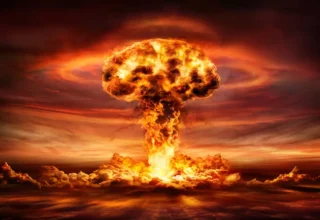

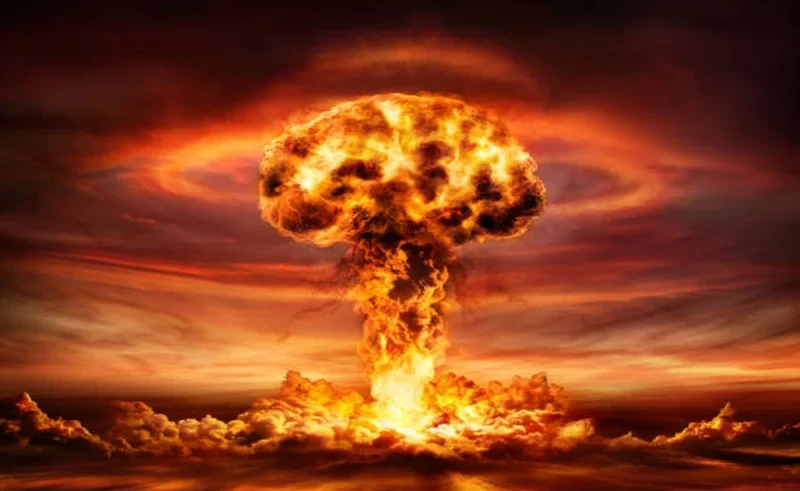
The world has perhaps not completely jumbled up the vision of nuclear war. What seems to be fading is the omnipresent reminder of that fear. As renewed arsenals build up, arms control is becoming more fragile and military technologies more complicated, so are nuclear risk levels, but the danger of nuclear devices tends to be less focus of media attention than, say, today’s economic, climate and technological crises.
SIPRI estimated that there were approximately 12,187 nuclear weapons in the hands of nine nuclear-armed states and that all nine states were conducting modernization programmes. The institute also says there are escalation risks due to geopolitical tensions and arm control being weak.
Arms Control Has Lost Its Safety Net
As the Cold War created strong motivations for Washington and Moscow to develop verification and communication systems. New START came to an end, eliminating the final bilateral treaty that caps the arsenal of America’s strategic weapons and those of the Russian Federation.
Without treaty verification and data exchange, and treaty-based inspections, governments have fewer methods to gauge changes to an opponent’s arsenal. SIPRI states that fading transparency drips away the predictability of deterrence.
Nuclear Weapons Are Becoming More Central to Strategy
Also the increasing use of nuclear arms as a nation’s instrument of power is a worry. New modernization takes place in the recent nuclear armed states and China’s arsenal is growing rapidly with a shift in strategic considerations to help factor beyond the conventional picture of US and Russian partnership.
The distinction between conventional and nuclear warfare can become confused with tactical weapons, dual-capable weapons and nuclear signaling. While this does not necessarily mean nuclear use is inevitable, it can introduce additional means of potential escalation of a conventional crisis.
Technology Is Compressing Decision Time
There’s another layer of uncertainty with new military technologies. Warning, communication and decision making may be impacted by hypersonic systems, space capabilities, and/or AI-assisted functions. According to SIPRI research, the space-nuclear nexus and the enhancement in the integration of AI in nuclear-related systems need to be addressed more.
If leaders are less able to judge if an incoming signal represents a genuine attack, or a technical error or a confused military manoeuvre, the risk of them making a wrong decision increases.
Public Fear Has Become Nuclear Fatigue
Nuclear war is a past of an older generation for many. Historical memories – Cuban Missile Crisis, civil-defense exercises and Cold war confrontation are not lived experiences.
In the meantime, people have heard about inflation, climate disasters, wars, chain disruptions and AI. Nuclear weapons are still highly destructive, but they’re impossible to see and feel until put into context during a crisis situation when they return to the newspapers.
More regional stories to keep you informed.
Why Did The World Ignore Khmer Rouge?
Check out how Cold War politics shaped UN decisions.
Could Severe Haze Return In 2026?
Find key warning signs and peak haze months.
Why Do Superpowers Lose Insurgencies?
Uncover the asymmetry behind difficult counterinsurgency wars.
Could Malaysia-Thailand Energy Ties Deepen?
Explore the new MTJDA deal and its implications.
Can India-China Trade Survive Border Tensions?
See how Delhi separates trade from security.
The World Has Not Become Safer?
The uncomfortable fact is that there is no necessary correlation between lower levels of public unease and lower levels of nuclear threat. Weapons are still very much in use, they’re getting increasingly modern, and the institutions meant to augment transparency are less robust than ever.
It is not the need to resume fear. It is a reawakening of consciousness. Arms control talks, crisis communications, risk reduction steps and sensible nuclear policies are just as vital because nuclear deterrence works not only by threats but also by the potential of making mistakes.
The world might no longer be terrified of nuclear war and used to live with nuclear war. But psychological “normalization” is a serious subject.
FAQs
Is there any fear of nuclear wars left in the world?
Not entirely. There seems to be less public concern about the threat of nuclear weapons and more significant strategic risks.
Why is New START important?
New START capped the number of strategic nuclear warheads that Russian and American strategic forces can use, and verified and provided transparency for the world’s two armies before the agreement ends in February 2026.
Why does nuclear stability matter to China?
China is quickly building up and modernizing its nuclear warheads, introducing uncertainty into the equations that used to center on the U.S.-Russian relationship.