
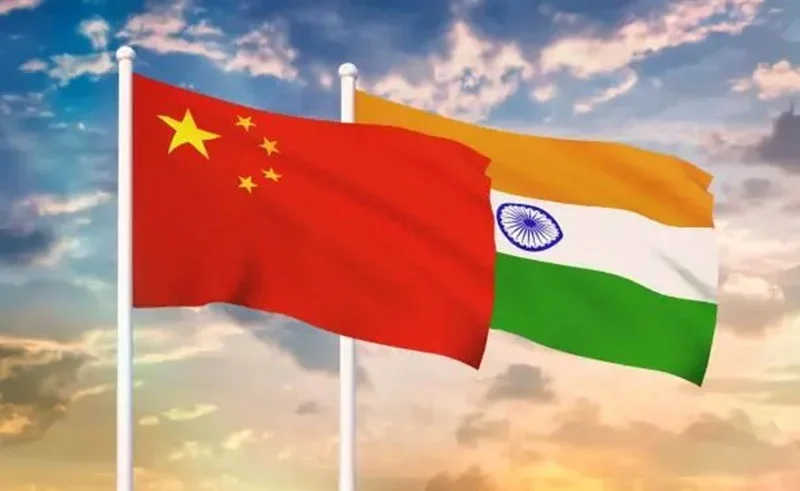
India’s dealings with China are moving into the security face-off – economic face-off arena. However, New Delhi has insisted that border tensions should not automatically be accompanied by a total economic break from the neighbours, but should be based on a policy where national security is equally the first principle, and ease of trade as the second.
This is a general calculation. India’s aim is to decrease strategic reliance on China without hurting the supply chains required for boosting domestic manufacturing and ensuring longer-term economic development.
Border Peace Comes Before Normalization
The border is the cornerstone of the ties for New Delhi. Normal bilateral relations always require peace and tranquility along LAC, which is repeatedly reiterated by Indian leaders.
The rejection of such a concept of parks and peaceful relations would not be based on the economy alone in India. While diplomatic measures such as Special Representatives’ conversations remain valuable tools for handling the conflict, they do not represent a “full-scale normalisation”.
Trade Continues Despite Strategic Friction
This is reflected in the level of bilateral trade. The trade has increased despite decrease in political and military confidence, indicating the depth of integration between China’s trade with India into Indian manufacturing.
As a result, India has escaped the risk of full-blown economic decipherage. It has, on the contrary, taken a more proactive approach of preferring de-risking of investments, selectively gained access to China’s capital, and tightened the rule of entry in critical sectors, but it is still importing inputs needed by the Indian industries.
Pharmaceutical ingredients, solar equipment and electronics components are examples of this practical application. It can play a strategic game with China without losing out on the Chinese industrial inputs to build their capacity in India.
Selective Decoupling Protects Strategic Autonomy
This is not a contradiction of the New Delhi point of view. It is about making the economy interdependent, rather than a duvet for sleeping on.
There is great potential for Industrial Growth in India to be achieved through Chinese Capital and components, and there is also potential for mitigating Strategic Exposure due to proper controls on sensitive technologies and digital channels and Critical Assets.
Their aim is not to become self-sufficient right away. The idea is to slowly develop home alternatives in order to reduce economic reliance, not today and not at the expense of growth.
Multi-Alignment Gives India More Room
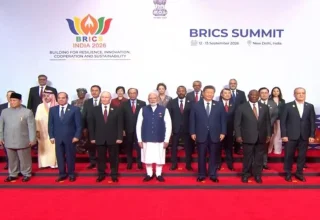
This economic-security divide is strengthened by the foreign policy of India. The cooperation plans India is part of, like the Quad and the BRICS, illustrate its desire not to get tied up with a single geopolitical bloc.
The flexibility will give India some margin to handle the competition with Beijing and its relations with other partners, which include the United States, Russia and Europe.
In Delhi, strategic autonomy is thus neither a matter of balancing economic engagement with security resistance but rather a combination of both. It really is about controlling a couple of them.
Strategy Has Limits
India’s strategy is also fraught with dangers. This accounts for the severe impact of a large trade deficit and reliance on Chinese industrial inputs which can, in their wake, warrant the Indian businesses to the risk of using disruptions and political tensions.
Meanwhile, stricter investment limitations may hinder investment access in the same manner as they constrain access to capital. The problem is to make de-risking ultimately lead to country power rather than an increasing reliance on another foreign power.
Explore the latest India diplomacy stories
How did India secure BRICS consensus?
Check out how New Delhi shaped the declaration.
Can India strengthen the expanded BRICS?
Find out how India could drive economic growth.
What did Marcos bring to BRICS?
Uncover the Philippines’ ASEAN priorities at the summit.
What’s behind the India-China border dispute?
Browse the latest developments shaping border tensions.
What’s next for India-Russia defense ties?
See the latest S-400, BrahMos, and manufacturing progress.
What India’s China Strategy Really Means?
The policy in India can be best comprehended as economic pragmatism under strategic constraint. While Delhi does not want border issues to influence the course of every trade transaction, it is also not prepared to weaken its security posture to accommodate trade.
The balance is here to stay and that’s the nature of India’s economy being intertwined with the economy of Asia. India is not aiming for any purpose of completely severing its economic collaboration with China, but rather aims to gradually reduce it.
FAQs
Why is India still doing business with China despite problems at the border?
Although many Chinese industrial inputs are currently necessary to the inner manufacturing, there will be a perilous economic break if the India-China trade is stopped.
Is it really India’s desire to normalise relations with China?
India welcomes better ties, but says peace and stability with LAC a “critical precondition” for overall normalization.
What is the Selective de-risking strategy for India?
For selective de-risking, investment and technology from China were reduced in certain critical industries while imports of the critical items were still allowed for local industry.