
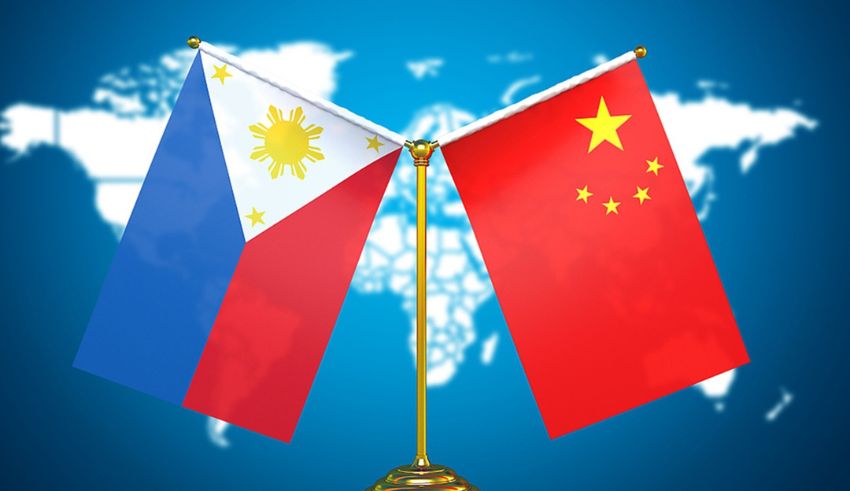
Taiwan, officially known as the Republic of China (ROC), is a self-governing island that split from mainland China in 1949 after a civil war. However, China, officially known as the People’s Republic of China (PRC), considers Taiwan as a renegade province that must be reunited with the mainland, by force if necessary.
China has never renounced the use of military force to achieve this goal, and has repeatedly warned other countries not to interfere in its internal affairs or establish official ties with Taiwan.
The Philippines, officially known as the Republic of the Philippines, is a Southeast Asian country that has a long history of diplomatic and economic relations with Taiwan.
However, the Philippines also adheres to the “One China policy”, which recognizes the PRC as the sole legitimate government of China and does not maintain formal diplomatic relations with Taiwan. The Philippines and Taiwan maintain unofficial ties through their respective representative offices, such as the Manila Economic and Cultural Office (MECO) in Taipei and the Taipei Economic and Cultural Office (TECO) in Manila.
The issue of Taiwan has become a source of tension and controversy between the Philippines and China, especially in the context of the ongoing disputes and conflicts in the South China Sea, where both countries have overlapping claims and interests. China has accused the Philippines of colluding with the US and other countries to contain and provoke China, while the Philippines has accused China of violating its sovereignty and rights in the maritime area.
The trigger and the reaction of the issue
The issue of Taiwan was triggered by the recent presidential election in Taiwan, where the incumbent president Tsai Ing-wen, who advocates for Taiwan’s sovereignty and democracy, won a landslide victory over her rival Han Kuo-yu, who favors closer ties with China. The election was widely seen as a referendum on Taiwan’s future and its relations with China, amid the rising pressure and threats from Beijing.
The election also drew the attention and the support of many countries and leaders, who congratulated Tsai on her victory and expressed their solidarity and friendship with Taiwan. Among them was the Philippine president Ferdinand Marcos Jr, who sent a message to Tsai on January 15, 2024, calling her the “next president of Taiwan” and wishing her “success in leading Taiwan to greater heights”.
Keep Reading
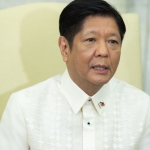
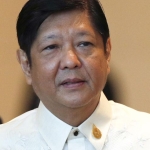
The message of Marcos sparked a strong reaction from China, which summoned the Philippine ambassador and warned the Philippines not to “play with fire” on the Taiwan issue. China’s foreign ministry spokesperson Zhao Lijian said that the message of Marcos was a “serious violation of the One China policy” and a “gross interference in China’s internal affairs”. Zhao also urged the Philippines to “stop its provocations and return to the right track of resolving disputes through dialogue and consultation”.
The Philippines’ foreign ministry, in response, reaffirmed its adherence to the One China policy and said that the message of Marcos was intended to recognize the mutual interests between the Philippines and Taiwan, such as the 200,000 overseas Filipino workers in Taiwan and the successful democratic process in the island. The foreign ministry also said that the message was not meant to undermine the diplomatic efforts to end the war in Yemen, where the Philippines and China are both involved as part of a Saudi-led coalition.
The implications and the prospects of the issue
The issue of Taiwan has implications and prospects for the future of the relations and the cooperation between the Philippines and China, as well as between the Philippines and Taiwan. On one hand, the issue could worsen the already strained ties between the Philippines and China, and increase the risk of confrontation and conflict in the region. On the other hand, the issue could also improve the communication and the understanding between the Philippines and Taiwan, and create more opportunities for collaboration and exchange in various fields.
The issue of Taiwan also depends on the actions and the responses of the parties involved, such as the US, the ASEAN, and the international community. They could either support or oppose the message of Marcos, and either encourage or discourage the dialogue and the engagement between the Philippines and China, and between the Philippines and Taiwan. They could also propose or oppose additional measures or initiatives to address the issue and to maintain the peace and the stability in the region.
The issue of Taiwan is a complex and sensitive issue that requires careful and prudent handling and management, as well as constant and constructive dialogue and consultation, among all the parties concerned. The issue of Taiwan is not only a matter of sovereignty, but also a matter of security, democracy, and human rights. The issue of Taiwan is not only a bilateral issue, but also a regional and a global issue that affects the interests and the values of many countries and actors. The issue of Taiwan, therefore, is a challenge and an opportunity for the Philippines, China, Taiwan, and the world.