
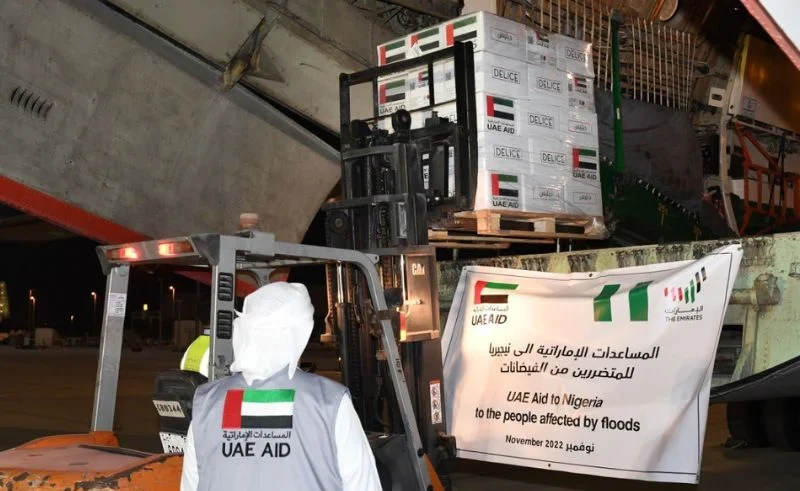
A small kingdom in the air off the Persian Gulf, the United Arab Emirates is unobtrusively keeping one of the most vital lifelines in the world running even now, humanitarian aid.
The strategy adopted by the UAE in the last few weeks may not be only generous, but it also displays the ability to operate in a tumultuous world
Bringing Care to Systems Collapsing
In Afghanistan, where the healthcare infrastructure remains in struggle, UAE-funded operations have airlifted necessary medical supplies and equipment and coordinated through Dubai Humanitarian. These deliveries are not just symbolic- they are keeping hospitals running and providing access to urgent care to vulnerable populations.
In war torn Sudan which lies much further west, the UAE has continued to support it despite the rising instability. It has collaborated with another organization, United Nations Office for the Coordination of Humanitarian Affairs, under which they have been able to fund emergency response programs that have helped in delivering food, medical care, and shelter to populations that have been displaced by conflict.
Crisis Zones of Africa
Even beyond conflict areas in the immediate future, the UAE presence is felt in the fragmented state of parts of Africa with the issue of displacement and weak systems.
UAE-funded teams have built/developed field hospitals, provided relief supplies, and assisted the refugee populations in Chad, Uganda, and South Sudan. They are not a one-intervention method–they are long-term operations that stabilize the communities which are under the threat of a long-term crisis.
The trend remains consistent during each deployment, which consists of rapid response, on-ground presence, and real impact.
Global Pledge by multilateral action
Global systems are also significantly intertwined with the efforts of the UAE. Its subsequent donations to United Nations-led efforts strengthen its position as an important humanitarian ally in the international arena. This has been made possible by the fact that by aligning itself with the multilateral structures; the country has not only been able to deliver aid but also strengthen the overall architecture of global response.
Coming to Work in a Disrupted World
The unique aspect of the trend is not only the magnitude of aid, but the circumstances in which it is provided.
The Strait of Hormuz and the continual interference with the Red Sea have complicated logistics, and the rising cost of a fuel management has combined with supply chain bottlenecks to add to the cost of humanitarian operations around the world.
Nevertheless, the UAE has maintained its rapid and efficient delivery of supplies using the fact that it is a global logistics hub. The infrastructure has made sure that aid can reach conflict zones without the critical delays when done by conventional routes, even as traditional routes commodify uncertainty.
Model of Reliability in Crisis Response
The United Arab Emirates is proving to be a different model- one that is characterized by speed, coordination and consistency.
Humanitarian aid can last-even in a fractured world-when it is supported by effective logistics, international collaboration and decisive action.
The role of the UAE is no longer just a supportive role as the world crises deepen. It has its roots in keeping assistance flowing whenever the globe requires it the most.
Catch The Latest Buzz In Movies & Media!
Why Avatar Way Of Water Caused Issues?
Explore projector problems during screenings.
Will Elvis Beat Avatar At Golden Globes?
Check awards clash and predictions now.
How Much Avatar Sequel Earned Opening Day?
Discover early box office collection figures.
Which Film Dethroned Avatar At Box Office?
Explore latest box office surprises today.
What Are VTubers Rising In Asia 2025?
Discover virtual celebrities dominating online.