
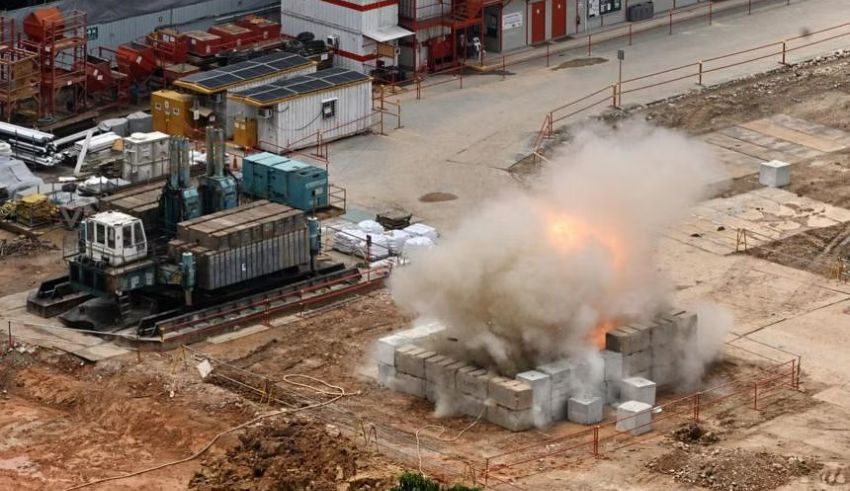
Singapore witnessed the detonation of a 100 kg World War II-era bomb on Tuesday by the Armed Forces Explosive Ordnance Disposal team. Over 4,000 residents living within a 200m radius of the construction site, where the unexploded bomb had been found, were evacuated.
They were given the all clear at around 5pm to return to their homes. The Building and Construction Authority engineers did a thorough check of the Hazel Park condominium and other buildings to see whether the structures were safe.
They gave the green light as the buildings were structurally safe for the occupants to return. The BCA highlighted that buildings in Singapore are structurally designed to withstand tremors. Inspection was done by the BCA, national water agency PUB, grid operator SP Group and the Housing Board.
Non-Structural Damage Found
However, non-structural damage was detected in some common areas of the Hazel Park condominium. Some residents found cracks on the glass, plaster boards and false ceiling. They also found dislodgement of fixtures like downlights and ceiling access panels.
These damages reflect the intensity of the blast or explosion as a protective wall had been set up around the bomb using sandbags and concrete blocks; this was meant to minimize the impact of the explosion.
Other infrastructure like drains and pipelines were found to be structurally safe. A mechanical and aerospace engineering expert said hairline fractures in structures near the blast site can still occur despite safety measures.
Keep Reading


The WWII Bomb Was Unstable
The Singapore Armed Forces took to Instagram to reveal that World War II-era bomb was unstable and had to be detonated. It said the explosive’s mechanism and metal components were expected to be unstable because of decades of deterioration.
Before the detonation, the authorities saw to that nearby petrol service stations emptied their underground fuel tanks and shut down for precautionary measures. The Singapore Armed Forces said moving the bomb would have triggered an explosion.
But this is not the largest bomb relic that the Ministry of Defense detonated. The army in Pulau Senang disposed of a 227kg unexploded aerial bomb in 2016.