
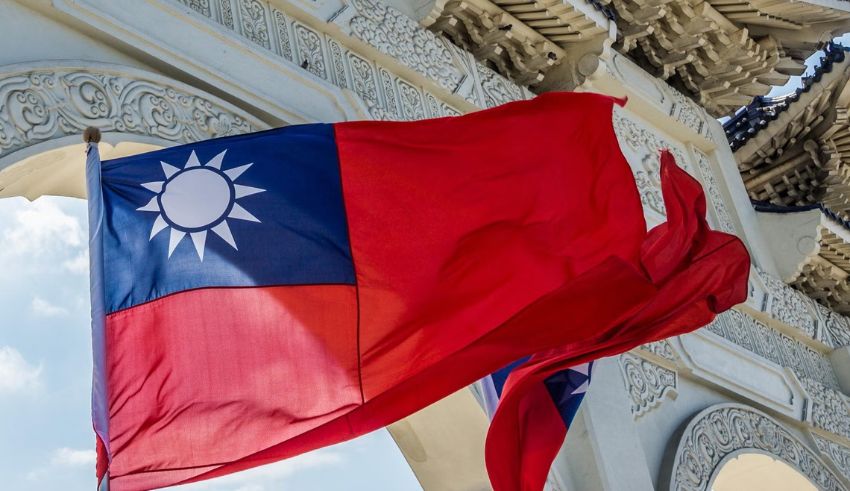
In the quiet corners of Taiwan, where the modern world meets ancient traditions, a clandestine battle unfolds. Shadows dance across the digital landscape, concealing a narrative known only as “yi mei lun,” the cryptic “us scepticism.” This covert operation weaves a tapestry of deception, blurring lines between truth and treachery.
It all began with whispers, a story in the United Daily News that claimed the unthinkable: America had requested Taiwan’s involvement in the creation of biological weapons, concealed within the walls of the island’s defense ministry. Denials echoed through the corridors of power, but the narrative persisted. A closer look revealed an unsettling truth—the leaked minutes were not of Taiwan’s making. They bore the eerie fingerprints of mainland China.
How Did The Disinformation Spread?
As the tale unraveled, it morphed into something more sinister—a myth that Taiwan planned to harvest 150,000 samples of its citizens’ blood for a chilling purpose: to craft a virus aimed at Chinese souls. This narrative, steeped in paranoia, took root, spreading like wildfire through talk shows and the digital realm.
This isn’t just disinformation; it’s a carefully orchestrated campaign, casting shadows over Taiwan’s political landscape. As the island braces for a pivotal presidential election, the stakes couldn’t be higher. Voters must decide whether to forge closer ties with America for defense or to pivot towards China, navigating treacherous waters of uncertainty.
Yet, beneath the surface, Taiwan’s society grapples with the sinister tendrils of disinformation, a menace so ingrained it has become the new normal. Most remain blissfully unaware of the puppet masters pulling the strings. They believe the false information originates solely within Taiwan’s borders, a reassuring but misguided notion.
The truth is far more insidious. Chinese actors play a pivotal role in crafting and disseminating these narratives, exploiting the fault lines within Taiwanese society. It’s a tactic reminiscent of Russia’s manipulation of America’s racial and cultural divides during the Trump era.
China’s systematic disinformation machinery has mastered the art of deception. They fabricate claims with astonishing speed, like the spurious notion that America intended to destroy TSMC, a Taiwanese chipmaker, a narrative that traveled from a misleading Chinese TikTok video to mainstream Taiwanese media in a matter of hours.
Keep Reading

“Us Skepticism” Narrative
The “us skepticism” narratives often involve “local collaborators” suspected of receiving orders and payments from China, but the web of funding remains elusive. It’s a murky world where journalism becomes a tool, a commercial enterprise serving the interests of shadowy figures.
Taiwan’s defenses are tested, and while laws against foreign interference exist, they are inadequate. Disinformation flows freely through unregulated digital outlets, bypassing the legal safeguards in place.
In the battle against disinformation, Taiwan finds itself in a race against time. While efforts to improve media literacy, promote fact-checking, and issue swift clarifications are crucial, they cannot match the relentless pace of Chinese propaganda.
The impact of disinformation on Taiwan’s public discourse is undeniable, but its sway on the upcoming election remains uncertain. The “us skepticism” narrative may cast shadows, but it may not eclipse the voters’ judgment.
As Taiwan navigates these treacherous waters, it faces an enemy adept at misdirection. The battle against disinformation is as much about safeguarding its sovereignty as it is about preserving the integrity of its elections. In this cryptic dance of shadows and whispers, Taiwan’s future hangs in the balance.