
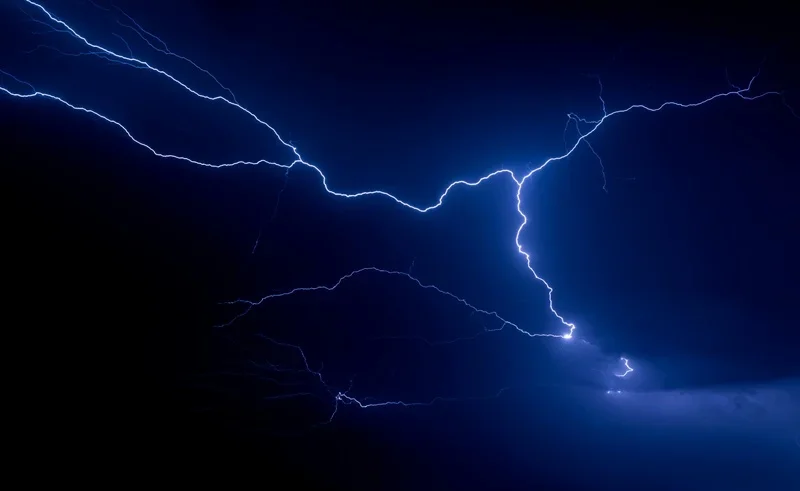
Singapore is one of the world’s lightning capitals with an average of 176 days of lightning each year. This is a must-know for any water sports enthusiast in Singapore, as it provides guidelines for the safety of lighting up outdoors at sea. It is important to know what to do in case of a storm while kayaking, whether you’re paddling up-and-down the coast or through open reservoirs, the difference between an incredible afternoon out and a deadly accident lies in your knowledge of what to do.
The incident of the lightning strike at Pasir Ris Beach in July 2026 is a reminder of the unpredictable nature of the weather in the tropics. When on open water and exposed to an electric current, quick and bold action is essential to reduce the threat of electrical shock.
The Reality of Lightning on Open Water
Water is not a lightning attractant, but it’s a great conductor of electricity! If a cloud-to-ground strike occurs across the water’s surface, the current will flow horizontally across the water in all directions. A sea kayak or a paddleboard extends above a completely flat surface and, therefore, provides the watercraft and paddler with the highest elevation in the immediate vicinity—like a lightning rod.
Furthermore, tropical storms in Singapore can form locally with immense speed, meaning clear blue skies are not a guarantee of safety.
What to Do If You Are Kayaking During a Storm
If you are already on the water when the weather unexpectedly deteriorates, you must execute emergency procedures without hesitation.
1.Head for the Closest Shoreline Instantly:Immediate Action.
If you have paddled a long distance from your launch site, don’t try to return there. If the wind is strong and waves are high, look for the nearest shoreline and paddle at a 45° angle until you reach it.
2.Lower Your Visual Profile:Within 1 Minute.
When not able to get onto land before the storm arrives, place all the graphite and carbon fiber paddles flat on the deck. Stow fishing rods or metallic equipment down low. By crouching down in the cockpit, you will have a lower risk of being a primary strike area.
3.Evacuate the Water and Secure the Craft:Upon Reaching Shore.
When your kayak comes on shore, exit right away, away from the water. Pull out your watercraft from the shore but avoid staying by the shore. An active electrical storm has high water hazard potential in water boundaries.
4.Seek Proper Ground Shelter:Post-Evacuation.
Look for a substantial building or an enclosed vehicle. Do not get under the protection of tall, isolated trees, open picnic sheds or high rock walls, where lightning can easily jump to people.
Travel Smarter Today
Bali Or Thailand This August?
Compare both destinations.
Is A Cyclone Really Coming?
Find today’s weather facts.
Is Oahu Safe To Visit?
Check out the travel alert.
Why Is Thailand Weather Changing?
Uncover tourism impacts.
Where’s Asia Warmest This February?
Browse the top destinations.
Relying on Singapore’s Lightning Warning Infrastructure
Singapore has in place sophisticated automated warning systems to safeguard recreational users. The Singapore’s National Water Agency (PUB) has strict rules which are enforced on the water sports lightning safety on localized water bodies in Singapore.
If a Category 1 weather alert is issued, rental centers and public reservoirs use outdoor sirens, strobe lights and whistles to call out all watercraft. But as the old timers say, a lightning strike can sometimes precede a siren, so experienced paddlers know. It is important to be actively tracking live tools such as Meteorological Service Singapore Lightning Information Service before heading out.
FAQs
How far away can lightning strike from a storm?
The distance to which lightning can develop depends on the rain centre as much as 10–15 km from the center. When you can hear thunder, you are close enough to be struck even though the sky is clear above you.
When is it safe to return to the water after a storm?
The “30-Minute Rule” is strictly enforced. Wait at least 30 minutes after the last clap of thunder or sighting of lightning to return to your kayak.
Does a plastic kayak protect me from lightning?
No. A polyethylene plastic kayak is an electrical insulator, but if there is salt water or fresh rainwater on the surface of the plastic, a conductive path is formed. The water will flow straight through the moisture and the paddler.