









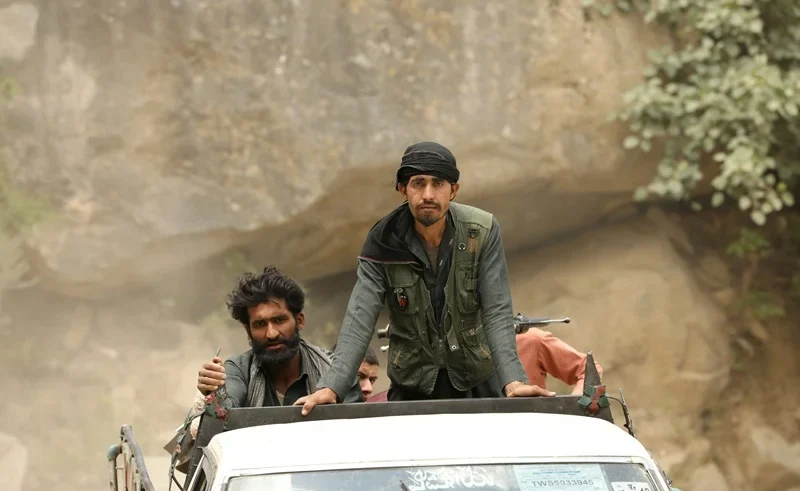
After the Taliban returned to power in Afghanistan, a challenging question for democratic governments is how to relate to the regime in power without inadvertently providing them with acceptability politically. But this is not about complete isolation and that some individuals require unconditional recognition, this is more about a well implemented policy of principled pragmatism.
While avoiding recognition of the Taliban as a political entity, a democracy can discuss matters that have regional/global security implications with the Taliban’ operational folks.
Engagement Does Not Automatically Mean Recognition
A government does not have to recognize a political movement as the government of a state to accept its control over a territory of that state. This separation provides the space for democracies to discuss what is possible, including humanitarian aid, flights, border issues and fighting terror.
The difficulty is making sure that the routine engagement of this sort does not slowly turn into some kind of diplomatic normalization. Meetings, agreements and public announcements can be easily twisted by the Taliban to give the impression that their rule is being accepted by the world at large.
Keep Engagement Functional, Not Political
The first cut-and-dried safety measure is to avoid anything but the real stuff. There is no problem discussing civil aviation, health, border crossings, humanitarian access, and security with Afghan officials without considering the Taliban as a normal diplomatic interlocutor.
Technical meetings should be as politically neutral as possible and have specific objectives. Any ceremonial visit to, diplomatic endorsement of, or high-profile political summit with the government could serve to continue any distinction between dealing with an incompetent government and affirming its legitimacy.
Use the United Nations and Other Intermediaries
There is the possibility of an additional safeguard through multilateral institutions. Services of the United Nations, humanitarian groups, and intermediaries, which are neutral to Taliban can be used to communicate with the illegal regime without suggesting direct relations in case of unrestricted relations.
This way, governments can also align their stance. If many countries have common conditions for engagement, then the Taliban do not have many chances anymore to exploit differences now between different governments.
Deliver Aid Without Strengthening the Regime
One potential best reason for continuing engagement is humanitarian assistance. Afghans cannot be replaced by the ruling regime in Afghanistan.
In democratic governments, assistance can be directed through the United Nations agencies, NGOs, and other humanitarian entities. If aid is delivered on the sidelines of official budgets, it limits the likelihood of international aid being directly used for regime finance, whilst also ensuring that food, health and essential services reach civilians.
Maintain Legal and Sanctions Firewalls
There should also be explicit and distinct boundaries on engagement, in the form of legal restrictions. Specific leaders of the Taliban may continue to be sanctioned or have their assets frozen while humanitarian exemptions enable essential humanitarian assistance to continue.
Such a framework is one which does not automatically remove diplomatic contact from political and legal pressure. Any easing of sanctions should preferably be “tied” to tangible policy changes, not just to more intensive diplomatic relations.
Biggest Risk: Creeping Normalization
The threat is not in one flash of recognition, it’s in normalization. A technical meeting can be regular diplomatic contact, the transition of which can eventually lead to political concessions without any meaningful progress in governance and human rights.
Photographs, Meetings and Foreign visits can also be utilized for domestic propaganda by the Taliban. Consistent messages are needed from the democracies: being engaged is a good way to address practical issues, not to support the political system forced upon the Taliban.
Catch up on Asia’s biggest geopolitical and regional stories!
Can Sustainable Tourism Save Asia’s Wonders?
Check out how sustainable tourism could protect Asia’s natural treasures.
Could Pakistan’s Defense Deal Shift Alliances?
Find out how the Saudi-Turkey deal could affect Iran and India ties.
Could Bab al-Mandab Trigger Energy Disruption?
Uncover why this key waterway faces growing Middle East tensions.
Why Is Southeast Asia Winning AI?
See why sovereign AI infrastructure is gaining momentum across Southeast Asia.
Can Indonesia Balance Beijing And Rivals?
Track down how Prabowo is navigating great-power competition.
A More Sustainable Middle Ground
Relative isolation is hard to achieve in times of instability because the migration across Afghanistan, regional security and humanitarian conditions, are impacted. However, unconditional engagement also has the potential of paying off policies that many democratic governments don’t like.
The balanced alternative is a middle ground which is politically, legally and financially calibrated where it is necessary, there should be a dialogue; where lives and security are involved, there should be cooperation.
Such a policy will not bring about a sudden change of regime for the Taliban. It has a sober but more important function that of safeguarding civilian interests, security of the international community, and leaving the route open for future political transformation.
FAQs
What can be achieved if democracies do not recognize the Taliban?
Yes. The governments may engage in functional and/or technical discussions with the authorities that currently have effective control without recognising them as the legitimate government of Afghanistan.
What is the justification of humanitarian aid?
There is no inherent approval of a regime in humanitarian assistance, especially when supplied by independent humanitarian organizations instead of through governmental bodies.
How democracies can avoid making engagement go down the rat hole.
They can keep contact focused on operational issues, there is no political symbolism, and they have separate diplomatic and legal restrictions.