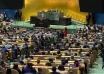







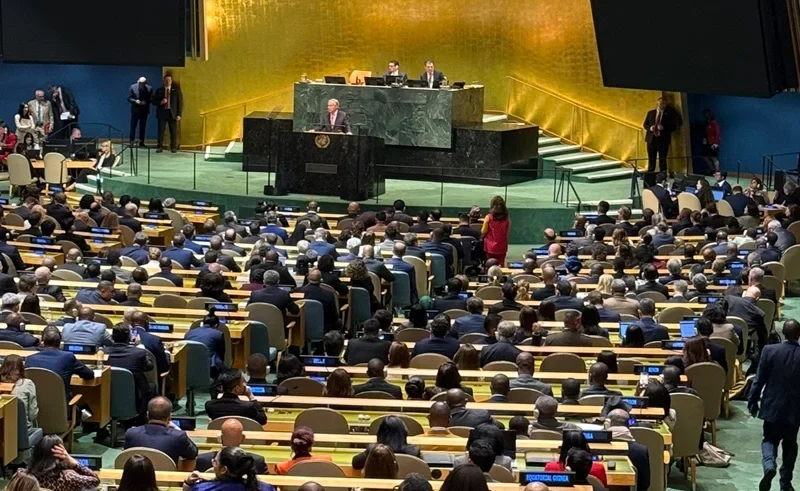
The 81st United Nations General Assembly opened on September 8, 2026, with the theme Restoring Trust, Managing Transformation: A United Nations That Delivers for All. The session, which is being chaired by Bangladesh’s Foreign Minister Khalilur Rahman, is attended by several experts and diplomats from around the globe.
The debate is around whether multilateralism is possible in the current context of countries increasingly pursuing their competing economic, security and technological interests. The idea of multilateral cooperation is not being abandoned, but it might just be morphing into a more flexible and problem-by-problem approach.
Why Is the Traditional Multilateral Order Under Pressure?
It is increasingly difficult for the UN system to resolve disputes on geopolitical issues. Meanwhile economic interdependence is getting more complex. Restrictions, sanctions and competition for critical technology.
Artificial Intelligence and other new technologies are evolving more quickly than many international governance mechanisms. Digital governance and technology is mentioned as one of the six priorities of UNGA 81.
Is Multilateralism Changing Rather Than Disappearing?
A networked or functional multilateralism is another new framework that sees countries working together through various institutions and smaller groups in cooperation with the UN with which they have the universal dimension.
There is no end to humanitarian and technical cooperation, even if there is a difference of opinion on general geopolitical questions. There are still opportunities to achieve this cooperation at a practical level in the fields of climate action, humanitarian assistance and development financing and technology governance.
The approach of his programme, six planks of which are devoted to peace and security, sustainable development, climate, human rights, technology, and UN reform.
What Is at Stake During UNGA 81?
Topics up for discussion at the 2026 High Level Week are related to conflicts, climate change, sustainable development, sea-level rise, international security and emerging technologies. The General Debate is the only occasion when representatives of all 193 UN Member States gather, thus keeping the Assembly as the largest and widest forum for global diplomacy.
There is another big issue of UN reform. In addition to reviving and strengthening the UN, Rahman has singled out “We the Peoples, Reimagined” as one of the pillars of her work based on multilateralism and reforming of the UN80.
Key global diplomacy and trade stories to explore.
Could UN talks ease Iran tensions?
Find how a UN meeting could shape Iran diplomacy.
How are China-ASEAN hubs evolving?
Uncover green and AI industrial opportunities across ASEAN.
Could investment links reshape Southeast Asia?
Browse the latest China-ASEAN investment initiatives.
Are Canada-ASEAN trade talks advancing?
See what the November trade target means.
How are EU-ASEAN ties deepening?
Track new developments in regional trade relations.
Can Multilateralism Survive?
The future is not necessarily an either-or scenario for universal institutions and smaller coalitions, according to UNGA 81. Instead, they both might continue to function side by side.
The broad diplomatic framework can be provided by the UN and flexible partnerships will focus on specific issues. It is uncertain how well this model will work if countries can learn to compromise, enforce international standards and put measures into practice that correspond to the promises made during the diplomatic talks.
FAQs
What is UNGA 81?
UNGA 81 refers to the 81st session of the United Nations General Assembly (UNGA), which is scheduled to take place from 8 September 2026 to 7 September 2027.
Who heads the UNGA 81?
Bangladesh’s President of 81st General Assembly session is Mr. Khalilur Rahman.
What is next week’s theme of UNGA 81?
The theme of the forum is ‘Restoring Trust, Managing Transformation: A United Nations that Delivers for All.”