

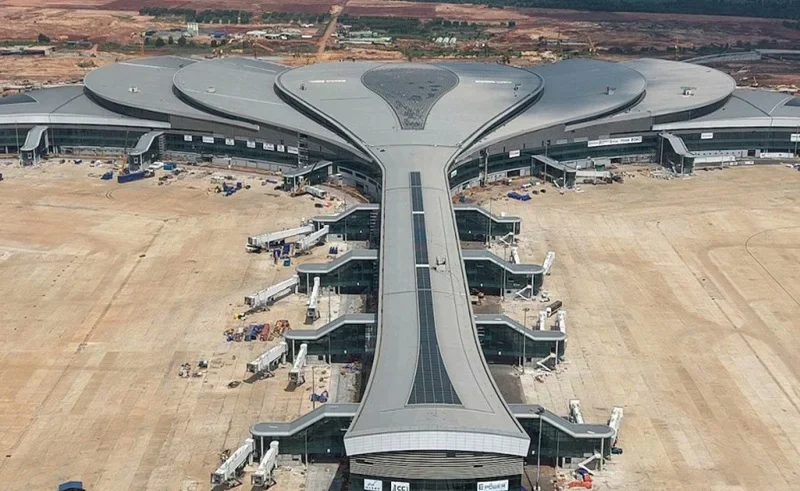
For years passengers travelling into southern Vietnam have been trapped in the famous congestion of Ho Chi Minh City’s Tan Son Nhat International Airport. But things are about to improve. The government has speeded up construction at the country’s next mega-hub in a massive national effort as thousands of workers and engineering support have helped it bypass previous construction delays.
This mega-project is progressing at a fever pitch, thanks to huge government support at the highest levels. The following are the official changes in the timeline for the opening of Long Thanh International Airport, the effect of the Vietnam army deployment on its infrastructure, and what international jet-setters must know prior to booking their trip.
The Push Behind Vietnam’s Mega-Hub Acceleration
Long Thanh is a high risk project in time. The current hub in HCMC is already operating at its maximum capacity even though it was designed for a much lower passenger volume each year. The Vietnamese government has deemed the new build as one of the urgent national priorities to eliminate critical bottlenecks.
The project has become a construction site 24/7, as confirmed by the latest information from the Airports Corporation of Vietnam (ACV). More than 9,000 manpower, including special military engineering units and the state-backed construction units, have been mobilized for the project. This large-scale Vietnam army infrastructure project has played a major role in the clearance of land, grading of terrain and completion of major cement and concrete structures at the airfield.
Current Long Thanh International Airport Opening Timeline
Thanks to the recent surge in labor and round-the-clock shifts, the schedule has solidified into a strict, non-negotiable roadmap.
The Ultimate 2026 Milestone
In a high-level on-site project inspection, Prime Minister Pham Minh Chinh strongly instructed all key construction stages to be fully completed by the third quarter of 2026. The aggressive push aims to keep the opening timeline of the Long Thanh International Airport on track in the fourth quarter of 2026 for opening commercial flight services.
Phase 1 Operational Goals
Once Phase 1 officially opens late next year, the airport will instantly transform the regional aviation landscape. The initial setup features:
- A world-class passenger terminal shaped like an elegant lotus flower.
- A massive 4,000-meter-long runway capable of handling massive commercial aircraft like the Airbus A380.
- An initial capacity to process 25 million passengers and 1.2 million tons of cargo annually.
More Travel Tips To Know
Got Your Vietnam QR Code?
Check out the new entry requirement.
Paying Bali Levy The Right Way?
Find the official payment method here.
Want To Skip Bali Queues?
Explore the autogate registration process.
Applying For Thailand e-Visa Soon?
Browse the steps before you travel.
Is Your Departure Tax Included?
See how to check your ticket.
What Travelers Need to Know: Navigating the Transition
The new mega-hub will make a complete transformation of international visitors’ experience in Southern Vietnam. When looking at travel plans that are scheduled for 2026 or later, here are a few of the key changes to consider:
1. The Strategic Location Shift
Long Thanh is in Dong Nai Province, about 40kms east of HCMC. Although it’s not within the central area like Tan Son Nhat airport, people won’t be stuck. The government is fast constructing express roads and city rail systems, including the extension of the city’s metro network, to maintain a seamless 30- to 45-minute transit service.
2. Relocation of International Flights
Vietnam National Administration of Tourism has prepared a detailed two-step transition roadmap for the international operations to the new facility. Most long-haul international flights will be shifted to Long Thanh as soon as it opens, with Tan Son Nhat focusing on domestic flights.
3. A Focus on Smart Tech Integration
Long Thanh is designed as a “secure, smart, friendly hub” as part of a recent Prime Minister’s Decision No. 1066/QD-TTg. They can expect state-of-the-art biometric facial scans, automated boarding gates, and seamlessly integrated digital customs controls that will eliminate tedious queuing.
FAQs
Why did Vietnam use military support to build the airport?
The government integrated military engineering units alongside civilian contractors to bypass labor shortages, streamline heavy land-clearing tasks, and guarantee that strict national safety and structural standards are met ahead of the hard 2026 deadline.
Will domestic flights to places like Hanoi or Da Nang use Long Thanh?
Initially, the vast majority of domestic flights will remain at Tan Son Nhat International Airport. Long Thanh is purposely built to absorb heavy, long-haul international traffic to alleviate extreme city-center congestion.
Is the airport connected to popular beach destinations?
Yes. The airport’s location is highly strategic. It connects directly to the incoming Bien Hoa–Vung Tau expressway, making it significantly faster and easier for international tourists to travel straight from their flight to the popular coastal beaches of Vung Tau.