









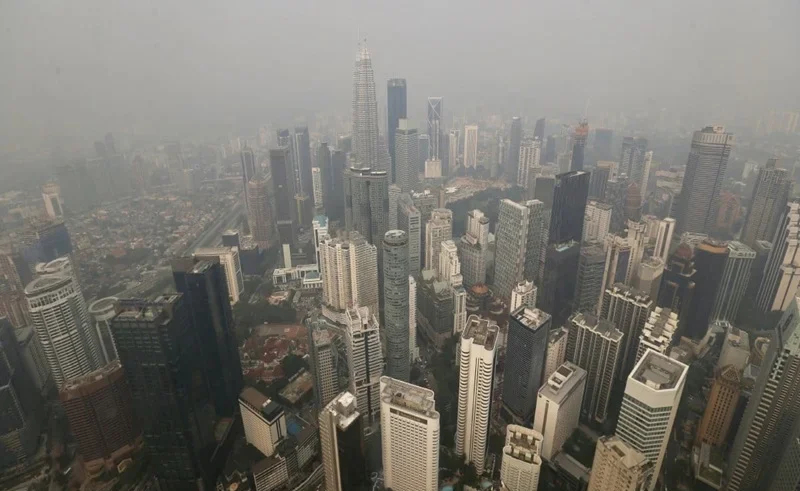
Rarely, the environment has issued a warning for Singapore, Malaysia and the entire southeast Asian region. The Singapore Institute for International Affairs last warned about a higher likelihood of severe transboundary haze events in the coming months on June 24, 2026, when it issued its “Red Alert” status.
With watching and waiting along with meteorological conditions that could form a dry spell of the driest years on record in the area, the warning is issued. Although haze is not a certainty, climate hazards and economic pressures create a heightened risk for more extensive haze pollution in 2026, experts say.
Why Has a Red Alert Been Issued?
The Red Alert is a designation given when there are concerns for conditions that historically have led to severe haze episodes in Southeast Asia.
Experts predict that more of the area will experience hotter weather and below-average rainfall with an El Niño pattern strengthening in the coming months. Meanwhile, a favorable formation of the Indian Ocean Dipole (IOD) was predicted during the second part of the year, which may aggravate the cause of dry weather even more.
Such weather leads to a situation in which greenery dries quickly and forests, agricultural areas are more prone to fire.
What Is Transboundary Haze?
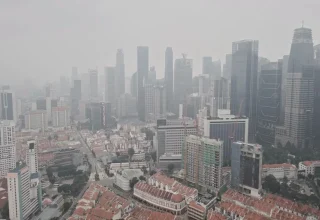
Transboundary haze is the term given to the smoke that moves from one country to another through the wind movement in the atmosphere, as a result of large-scale land burning or forest fires.
The countries which are especially vulnerable are Singapore, Malaysia and Brunei as the smoke from one area could travel great distances. Hazard situations can cause air quality to degrade quickly, impacting the health of the population, transportation, tourism and outdoor activities.
Major episodes of haze in the past have proved that an outbreak of air pollution in one region can rapidly escalate to become regional.
When Could the Haze Peak in 2026?
Weather is already being carefully observed, but it is expected that August and September 2026 are likely to see the maximum risk.
These months of the year can be characterized by a sharp drop in rainfall and still have high temperatures. If El Niño intensifies, drought-like conditions are expected to return to various regions in Southeast Asia according to forecast models.
August and September are thus considered the “hazardous” months by environmental analysts, and attention is thus being drawn to the need for ‘haze monitoring’ and ‘haze preparedness’.Thus, August and September are considered to be the two critical months in which ‘haze monitoring’ and ‘haze preparedness’ are needed, according to the environmental analysts.
Why Are Economic Factors Also Raising Concerns?
Some landowners and agricultural operators are financially stressed due to rising agricultural costs, rising fertilizer prices and the growing demand for biofuel crops. Such pressures may make such land clearings more tempting in the case of illegal slash and burn options which are far more economical than mechanical clearing options, according to environmental observers.
The hazards of unchecked fire may increase greatly if such practices are carried out during an unusually dry period of the year.
How Is Malaysia Preparing for a Possible Haze Season?
The authorities have issued a warning that the rains might drop drastically in the critical El Niño season. As drought conditions, when water resources are threatened, get worse, so do cloud-seeding operations become a part of emergency preparedness plans.
However, government bodies also are likely to step up their air quality and fire-prone monitoring efforts over the next few months.
Stay updated on Singapore’s latest travel, weather, and money trends.
Who Gets The Mid-Year Bonus?
Check out the eligibility rules and payout details for civil servants.
Can You Travel Cash-Free Easily?
Discover how QR payments simplify spending across three countries.
Ready To Submit Your SGAC?
Find out the key rules for hassle-free Singapore entry.
Why Is Singapore So Cold?
Uncover what’s behind the unusual temperature drop and chill.
Where Does Your SGD Go Further?
Explore luxury Asian destinations offering stronger value for Singapore travelers.
What Could This Mean for Singapore?
Owing to the geographical position and high population density, Singapore is remarkably vulnerable to transboundary haze.
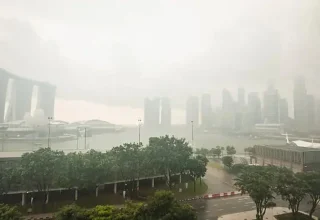
Serious haze events may involve decreases in visibility, heightened respiratory health issues and changes in activities outdoors. Readings of air quality are frequently monitored by the schools, businesses and planners of events to ensure that any extra precautions for the day are warranted during the haze.
There is no immediate health threat, but authorities are requesting people to stay up-to-date because weather conditions are changing.
FAQs
How many Red Alerts will reach the horizon in 2026?
The Singapore Institute of International Affairs (SIIA)’s haze warning, called the “Red Alert”, is a high level advisory given when there is a higher risk of severe transboundary haze across Southeast Asia because of the expected dry weather.
What is responsible for the transboundary haze?
Transboundary haze is the result of forest fires or land-clearing operations (LCO) in the region with smoke carried over country lines by regional wind systems.
Why is there a chance of haze this El Niño?
One of the greatest contributing factors is indeed El Niño which tends to cause less rain and hotter temperatures, making fires more likely.