









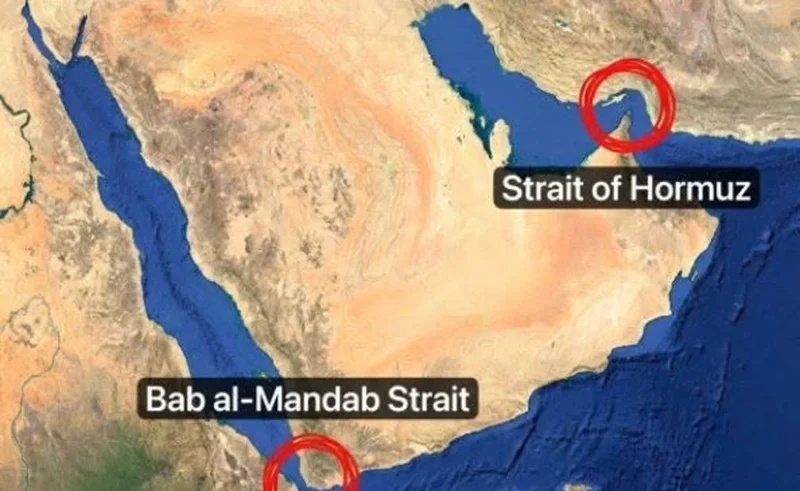
The Strait of Hormuz for years has taken the center of discussion when it comes to energy security in the Middle East. But the increased tension in the Persian Gulf over shipping is creating another very significant shipping route of the Bab al-Mandab Strait.
The 18-mile wide Red Sea-to-Gulf of Aden strait is at the crossroads of global shipping, regional conflict and energy security. A prolonged break could reverberate well beyond the Middle East.
The new lesson is one that’s quite jarring: skirting around one energy choke point may well lead to another.
Saudi Arabia’s Red Sea Strategy Faces a New Problem
The East-West Crude Oil Pipeline designed by Saudi Arabia is part of an attempt to decrease reliance on the Strait of Hormuz. The crude pipeline system will transport oil from the country’s Eastern Province to Yanbu on the Red Sea to offer a new route for exporting crude oil.
However, pipelines do not provide 100% protection from marine exposure. Oil is still shipped from Yanbu to the markets and ships travelling via the Red Sea also have to pass through Bab al-Mandab.
This makes the strait a very important end pass-through in an alternative route which it was to be the most resilient of.
Houthi Factor Changes the Security Equation
Securing the Red Sea has increasingly become a question of the Houthis’ growing capability to menace commercial shipping to and from Yemen. The costs of drones, missiles and uncrewed maritime systems are not significant for naval power requirements.
A relatively inexpensive weapon would enable the commercial operator and/or navy to employ expensive protection measures or reject the route entirely.
The danger is not just to individuals but also to those the bad guys want to attack. Things can change when disruption happens, from shipping decisions to insurance risk calculations to forecasts on the energy market.
Cape of Good Hope Comes at a Price
One of the alternatives is a much longer voyage with vessels going round the “Cape of Good Hope” around Bab al-Mandab, which is avoided. Some routes between other destinations, Europe and the Gulf can be 10 to 14 days longer than usual, due to the extra sailing time.
An extended voyage has a more beneficial impact on getting ships off the water for longer. This not only limits the number of tankers available, but also can raise freight costs when keeping the volumes of oil the same.
Asia Faces the Greatest Strategic Exposure
This is especially consequential for Asian economies, which take up a significant amount of Middle East crude exports. Any disruption to the Red Sea may have repercussions for the refiners, shipping companies and consumers thousands of kilometers away from the area of the conflict.
Responding Asian buyers can reduce their reliance and add strategic inventories and buy more Atlantic Basin crude.
That’s not a solution that will replace Middle Eastern energy dependence. It is instead, much more expensive and complex and entails a more intricate global trading system.
Stay Updated on Asia’s Biggest Developments
Why Does Singapore’s Hormuz Stand Matter?
Check out how Singapore’s position could affect global trade.
Why Is Gen-Z Leaving Bumble Behind?
Find out how the latest interface update is changing dating habits.
What Does OPEC+’s Output Shift Mean?
Uncover why the modest increase signals market stability.
Why Is Seoul Becoming More Affordable?
Explore why Seoul is emerging as a top-value destination in 2026.
How Is UAE Supporting Global Aid?
See how the UAE continues humanitarian efforts amid growing disruptions.
Naval Power Cannot Solve Everything
To protect the vital commercial routes, international naval deployments are needed, but the division and keeping up a permanent security for each tanker is no easy task and will cost more than we want.
Perhaps more significantly, the military escort takes on symptoms and does not confront political issues that give rise to the threat. As long as there remains instability along the Red Sea’s coastline, shipping firms will remain incorporating geopolitical risk into their operations.
The political issues and challenges are thus as important as the military ones.
FAQs
Why is Bab al-Mandab important?
The Bab al-Mandab is the inlet that links the Red Sea to the Gulf of Aden and which is an important maritime chokepoint between the Middle East, Europe and Asia.
What happens to oil prices when there’s a disruption?
Transportation, insurance and freight charges may rise and availability of tankers may become more stringent due to disruption. All of these pressures can feed into an increase in energy prices.
What is the link between Bab al-Mandab and Hormuz?
Hormuz is the main port for the Persian Gulf export trade and Bab al-Mandab connects the Red Sea and the Gulf of Aden. A disruption at either chokepoint can make energy flows more complicated around the world.