









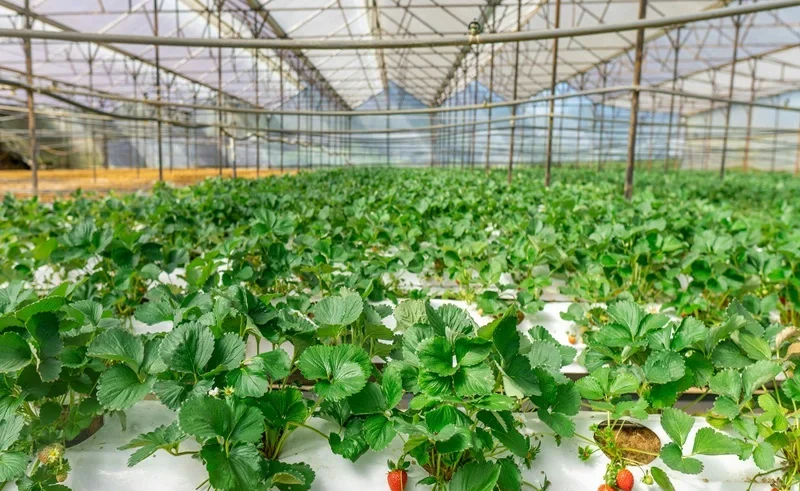
The region of Southeast Asia is under increasing pressure to grow more food from less land, in the face of soil deterioration and the escalation of land resource inputs and the variability of climate. Brazil is a good example of how agricultural science is making the difficult tropical environment productive, in this environment.
The Brazilian Agricultural Research Corporation is at the heart of the agricultural transformation in Brazil. It has been researching how to improve technologies such as farming methods, varieties, soil management, etc. for tropical countries and has new ways of South-South cooperation in agriculture with ASEAN countries.
Turning Acidic Soils into Productive Farmland
Embrapa’s greatest success has been the improvement of the highly acid and nutrient deficient soils of the Cerrado region in Brazil. Previously marginal land became suitable for large-scale farming via liming and gypsum application, and better soil use.
The same soil issues are found elsewhere in Indonesia, Malaysia, Vietnam and the Philippines. This approach could help the farmers within ASEAN who have degraded their farming land to rehabilitate it in the country and enhance the productivity and reduce the pressure to clear land in forests if they adapt them.
Making Agriculture More Climate Resilient
Agriculture in the Southeast Asian region is facing increasing problems of climate volatility. Global climate change with altered precipitation, drought events, heat waves and extreme weather events could undermine staple food crops like rice and maize.
Embrapa heat and drought resistant selections of crop varieties could be used to make this in support of the development of joint breeding programs with agricultural institutions in the ASEAN countries. By sharing scientific info and creating locally adapted plants, farmers would be better able to produce crops amidst growing climate uncertainties.
Reducing Dependence on Chemical Inputs
Another field in which Brazilian agricultural expertise could be useful to Southeast Asia is biological nitrogen fixation. Embrapa also contributed to the development of excellent bacterial inoculants that allow crops, like soybeans, to harvest nitrogen from the atmosphere.
Biofertilizers, beneficial microbes and biological crop protection methods are areas of increasing research that may be adapted to assist ASEAN farmers to tackle their input costs and curb over-fertilisation of crops and agricultural runoff from fields. These technologies may be especially important to smallholders who are struggling with fluctuating international fertiliser prices.
Related Articles Recommendation
What Trade Agendas Drive ASEAN Ties?
Check out the key trade priorities shaping ASEAN relations.
Why Does ASEAN Avoid Choosing Sides?
Find out how ASEAN balances US-China relations.
What Does Russia Offer ASEAN States?
Uncover Russia’s growing strategic offers to ASEAN.
Why Did Myanmar Reject ASEAN’s Plan?
Browse why Myanmar rejected the special envoy mechanism.
How Are Maritime Deals Reshaping ASEAN?
Look into Indonesia-China deals affecting ASEAN interests.
Integrating Crops, Livestock and Forestry
Integrated crop-livestock-forestry system is another possible model for ASEAN, as worked out by Embrapa. They incorporate farming and the cultivation of crops, livestock and trees within a single land-management system to yield several outputs within a single enterprise.
Where plantation and agricultural land systems are well developed the adopted adaptation of such systems has the potential to enhance the efficiency of land use and contribute to rehabilitation of degraded land. They can provide additional income streams for farmers and help make farming systems more sustainable.
FAQs
What can Embrapa do for the agriculture of the ASEAN?
Embrapa may transfer knowledge on tropical soil management, breeding of crops, use of biological inputs, and integrated farming systems which could be applied to the Southeast Asian region.
Which countries in ASEAN could be the beneficiaries?
Indonesia, Malaysia, Vietnam, Thailand and the Philippines, they could cooperate in various issues such as soil restoration, sustainable and adapted agriculture and climate-resilient varieties.
Is there any existing technology ported from Brazil that can be directly transferred to ASEAN?
Before widespread technology adoption, technologies need to be tested and adopted for local conditions of soils, climate, crop, agricultural systems and socioeconomic conditions.