










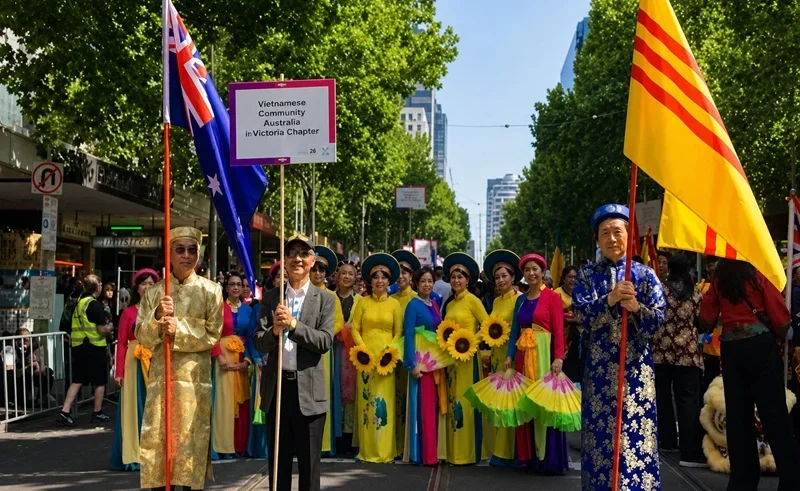
Vietnam is concentrating on finding solutions by putting its focus on leasing foreign assets. The focus of this approach is “Viet Kieu“, or the overseas Vietnamese population, with which Hanoi hopes to establish strategic partnership instead of the traditional remittance economy.
The shift is registered in Politburo Resolution 23-NQ/TW, which emphasizes greater capital contribution, business network and international expertise ability of the diaspora. Two significant markets that are significant are Australia, and New Zealand.
Turning the Diaspora Into a Technology Bridge
The greatest opportunity is technology transfer. With this in mind, resolution 23 highlights contributions from abroad where Vietnamese scientists, academics, entrepreneurs and technology specialists from abroad would participate without needing to come to Vietnam.
This may open avenues for cooperation between Australian-based professionals and businesses and institutions in Vietnam, given that their fields of expertise include artificial intelligence, semiconductors, and green technology. The model might enable Vietnam to tap into global knowledge and keep talent in global innovation networks.
Trade Networks Can Strengthen Economic Links
The trans-Viet link between Vietnam, Australia and New Zealand may also be a commercial bridge to be set up through the diaspora. Vietnamese-Australian and Vietnamese-New Zealand businesses can have greater insight into both markets, which may help them to find suppliers, customers and investments.
There is also the cross border framework provided under a range of trade agreements, such as the CPTPP, the RCEP and AANZFTA. The diaspora entrepreneurial opportunities may provide preferential access to trade agreements and enable export of agricultural products and manufactured goods, technology services, and other exports.
Education Creates a Long-Term Talent Pipeline
Education is another big tie-in. The decision will likely expand the ongoing stream of Vietnamese international students coming into Australia, who are bilingual and trained overseas.
The universities, entrepreneurs and the community can close this linkage by forming research partnerships, professional exchanges and business networks. These partnerships may develop over time to help integrate the various business cultures and integrate Australian skills into Vietnam’s quick-changing economy.
Investment Beyond Traditional Remittances
Vietnam has room to access financing capital from the minorities’ community without the reliance on remittance from households. Australian and New Zealand second and third-generation entrepreneurs may find that they are more likely to be “direct investors” in industries like healthcare, renewable energy, etc., as well as fintech.
Such capital would be able to provide more than financing to Vietnam. Expanding the management equation can include diaspora investment that could convey management skill and international relationship and awareness.
Trust Remains the Biggest Challenge
But, as every opportunity is, there are significant hurdles. Vietnamese communities in Australia, especially those who have experienced the war and the period after 1975, may be skeptical of government sponsored diaspora projects.
It’s not just an investment incentive that can bridge that political and historical divide. Transparency, continued dialogue and respect for community diversity and views will be necessary for meaningful engagement to occur.
Vietnam, ASEAN & Russia: Key Stories to Explore
What Could Reshape ASEAN Economic Ties?
Check out Vietnam’s key economic priorities.
What Are Vietnam Airlines Transit Rules?
Find essential layover rules for Filipinos.
How Could Trump Tariffs Impact ASEAN?
Uncover the export impact on three countries.
What Does Russia Offer ASEAN Partners?
Browse key takeaways from the declaration.
What Should You Avoid During Ghost Month?
Learn important Vietnamese taboos and customs.
Vietnam Must Make Participation Easier
A new problem arises with the younger generations. Migrants from Australia and New Zealand might not have as close a personal relationship with Vietnam as other Vietnamese migrant groups, and may place greater value on business opportunities than on culture.
Vietnam needs to make participation closer to reality by easing the administrative burden, enhancing regulatory transparency and boosting investor protection. A diaspora strategy is only going to work if people find it commercially attractive as well as an emotionally fulfilling experience to connect with Vietnam.
FAQs
What is the strategic approach of Vietnam towards the Vietnamese diaspora?
The strategic policy of Vietnam draws overseas Vietnamese communities to play a role in national development by investing in national development, applying technology, trade and education networks, among other international communities.
Why are Australia and New Zealand important?
Australia and New Zealand have Vietnamese communities and good education, trade and investment links with Vietnam, providing Hanoi with potentially valuable economic and knowledge networks.
How to leverage the diaspora for technology transfer?
Foreign Vietnam knowledge holders can assist Vietnam remotely in the form of research, consulting, partnership and sharing knowledge even without the presence of overseas experts in Vietnam.