










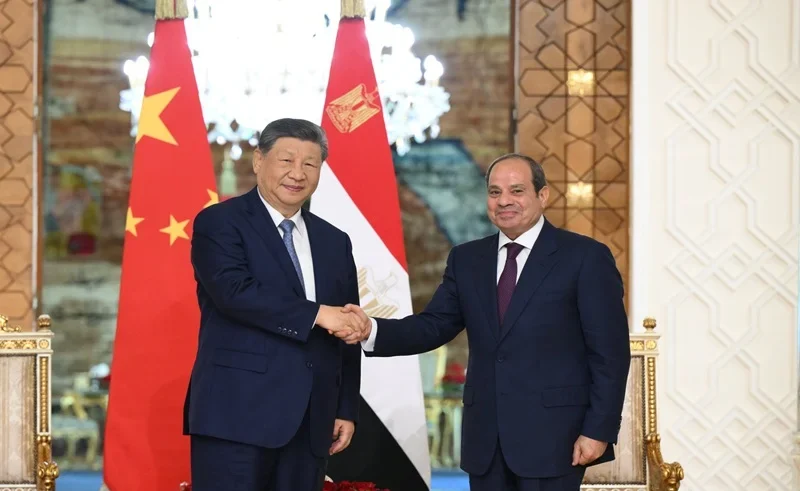
President Xi Jinping’s state visit to Egypt on 1st – 2nd September 2026 is more than just a symbolic moment. The visit 10 years and coinciding the 70th anniversary of the building of diplomatic ties between Egypt and China, has been timed to showcase Beijing’s ambitions in the region, where traditional alliances are being challenged.
The changing nature of security and trade in the Middle East, China is positioning itself as a potential option to replace the traditional Western powers, providing investment, technologies and terms of diplomatic engagement. In Egypt, however, the old trends still hold: broadening options in strategic direction is in their interest.
China Is Expanding Beyond Economic Influence
There are several areas of cooperation going beyond Cairo and Beijing’s ties as infrastructure and trade: On the occasion of the visit both sides also spoke of greater cooperation in various economic, technological and security spheres and the comprehensive strategic partnership between the two countries was emphasized, as a whole.
The economic aspect continues to be focal. Cooperation on industrial localization, technology transfer, renewable energy, advanced manufacturing and digital infrastructure increases China’s commitment to Egypt’s development goals. This is particularly true of the Suez Canal Economic Zone, which is located next to one of the world’s most strategic trade corridors.
That makes Egypt not only a bilateral partner but also an economic gateway for China that connects its economic interests both in the African continent and Mediterranean and the Middle East.
Xi’s Security Message Is Equally Significant
During the visit, Xi proposed that Middle Eastern nations seek to be “masters of their own destiny” and pushed for a more comprehensive regional security mechanism. Beijing also affirmed its support for the Palestinian cause of a state in the region and a two state approach.
The language echoes China’s broader diplomatic message to expand the notion of regional autonomy in order to attack foreign influences. It lets China distinguish itself from the traditional interventionist strand and proffer to governments which want to be more strategically independent.
As it pertains to Egypt, the message has a special resonance for an Arab nation that has historically maintained close security relations with the United States and explores ties with China and other key nations.
Egypt’s Strategic Balance Creates an Opening
Its strategy can be interpreted as strategic diversification of its foreign policies in different countries and to gain its economic opportunities and maintain its diplomatic flexibility.
Adding another layer there’s the expanding defense relationship. Recent joint military drills between China and Egypt is an example of moving away from the security cooperation “economy first”.
This is important because Beijing is looking to use military diplomacy to deepen political ties and develop influence in the longer term.
Suez Canal Makes Egypt a Bigger Prize
The Suez Canal is China’s interest in Egypt. The waterway continues to be vital to trade and the area ship routes are threatened has made the trade value of other waterways and more secure routes more important in the world.
Enhanced Chinese involvement in the Egyptian manufacturing, logistics and infrastructures sectors could thus generate influence that would go far beyond bilateral trade. It ties China’s Middle East initiative to China’s more ambitious plan, the Belt and Road Initiative.
China, Power, and Shifting Regional Alliances
Will China Defy US Oil Threats?
Check out how Beijing’s Iranian oil imports could test US pressure.
How Is China Shielding Iran?
Find out how Beijing is helping Iran withstand Western economic pressure.
Can Prabowo Balance China And America?
Uncover Indonesia’s strategy for balancing China, the US, and ASEAN.
Could China’s Islands Spark Conflict?
Browse how artificial islands are reshaping tensions in the South China Sea.
What Do Natuna Deals Mean?
See what Indonesia-China maritime agreements could mean for ASEAN’s future.
New Phase in China’s Middle East Strategy
But the China-Europe Middle East trip by Xi runs counter to the course of Beijing’s primary strategy on the Middle East these days which means it’s not all about energy and trade. China is integrating investment, technology, diplomacy and security dialogue more and more into a regional strategy.
That doesn’t imply that China is eroding the United States. Rather, the Chinese are carving out a niche in a space in which state leaders are beginning to prefer multiple ties. Egypt is arguably one of the more obvious countries and states within that emerging multipolar form.
FAQs
Why is Xi Jinping’s Egypt visit important?
The visit marks a new level of collaboration between the two countries and underscores Beijing’s growing role in the Middle East, both on the political, economic, and security fronts.
What did Xi say about Middle Eastern security?
Xi urged to deepen regional responsibility for security and support the regional security framework, including all members.
What makes Egypt significant to the Chinese?
Beijing’s close relations with Egypt will place a strong emphasis on its strategic significance for China, its diplomatic influence in its region, and its financial strength.