
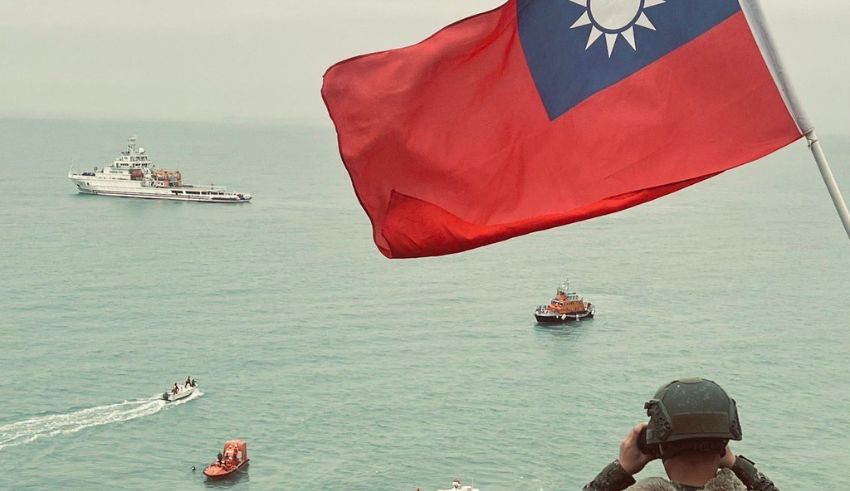
Rising tensions and the imminent prospect of armed war have brought China and Taiwan to a key and maybe dangerous junction in their complex interaction. This thorough investigation explores the historical background, present dynamics, and likely future paths that might affect the course of cross-strait interactions.
From China’s perspective, in line with its One China Policy, Taiwan is an integral component of its territory. Beijing does not rule out the use of force should it be absolutely required; rather, it sees reunification with Taiwan as an inevitable goal that should ideally be reached by peaceful means.
Position of Taiwan
Conversely, Taiwan runs as a separate entity with its own government, constitution, and democratic institutions. Though it is not formally acknowledged as an independent state, Taiwan seeks to preserve its distinct character and democratic government and runs with pragmatic independence.
The Military Action Threat
China has sent clear warnings saying that any push toward Taiwanese independence “means war.” These announcements highlight Beijing’s adamant will to stop Taiwan from attesting official independence. Large-scale military maneuvers close to Taiwan also act as a show of might and a statement of China’s readiness to use military might should provocation call for it.
Still a strong advocate of Taiwan’s security, the United States offers diplomatic support as well as weapons. This dedication has strained US-China ties especially when tensions around important events like the anniversary of the Tiananmen Square massacre rise, therefore adding layers of complexity to the geopolitical scene.
Keep Reading

The Gray Zone: Maritime Quarantine
China has alternative options than a full-scale invasion beyond their possibilities. One such technique is gray zone tactics, whereby China’s law enforcement and coast guard might impose a maritime quarantine. With this approach, China might be in charge of Taiwan without starting direct war.
Suggestive Situations Hypothetically
Under a restricted quarantine, China creates a “gray zone” around Taiwan that limits marine access and generates economic pressure. Diplomatic demonstrations, economic sanctions, and higher regional tensions would probably be the world reaction.
China increases the limitations in an intensified quarantine situation, therefore regulating communications, air travel, and shipping. This would probably inspire a more strong worldwide reaction including regional allies and cause major diplomatic and financial consequences.
Finally
Though an all-out war between China and Taiwan is still improbable, the situation calls constant attention. Stressing clear communication, regional cooperation, and careful diplomacy will help to prevent unintentional escalation. With planetary consequences hanging in the balance, these two neighbors negotiate the fine line between peace and conflict as others watch.