
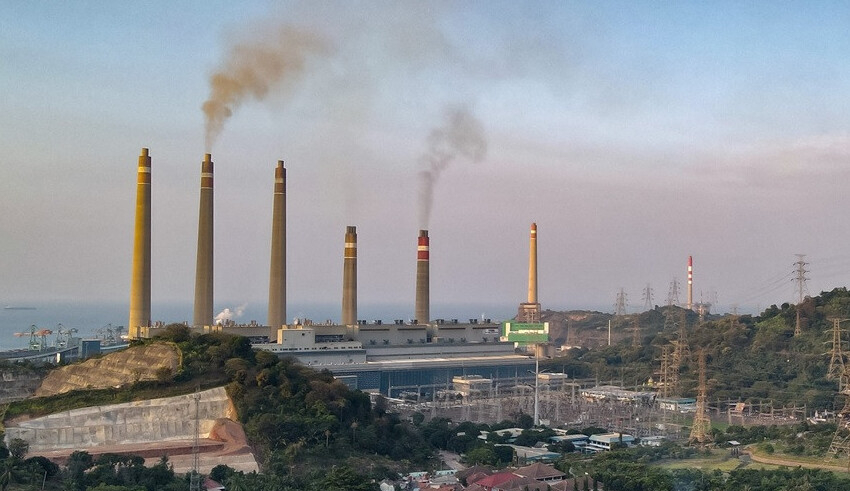
Indonesia is one of the major coal-producing nations in the world. But, it has pledged to minimize its fossil fuel consumption in the future years.
Last year, Indonesia struck five agreements to cut its carbon emissions. Among these was the Just Energy Transition Partnership (JETP) transaction for $20 billion. It was achieved during November’s Group of 20 conference in Bali. The agreement intends to convert one of the major coal-producing nations to renewable energy sources. Yet, experts caution that other obstacles must be addressed.
David Elzinga is a representative of the Asian Development Bank. He stated that the energy shift in Indonesia is “extremely unique.” According to him, this is due to the country’s rapid economic development, location, population centers, and opportunities for “clean energy.”
Indonesia is capable of generating power from the sun, dams, geothermal heat, and wind. Yet, according to the International Renewable Energy Agency, only approximately 12% of its energy potential is used. Almost all energy demand is satisfied by coal, gas, and oil, with coal accounting for 60 percent.
According to the International Energy Agency, Indonesia’s energy sector emitted around 600 million tons of carbon dioxide in 2021. This is the eighth highest emissions total in the world. Indonesia has the fourth biggest population in the world. Population and economic growth are anticipated to triple the country’s energy consumption by 2050.
Elzinga stated that it is difficult to make adjustments when there is such rapid expansion. Several more developed nations have more ambitious renewable energy ambitions. Nevertheless, according to academics, no country is presently reaching global climate objectives.
Keep Reading



Indonesian officials have begun to transform. For instance, they have introduced new solar energy regulations. In addition, they have set a goal of increasing sales of electric vehicles to 25 percent of overall vehicle sales by 2030. Yet, analysts fear that Indonesia has fallen behind other Southeast Asian nations.
By the JETP agreement, Indonesia pledges to achieve “net zero” emissions from its power sector by 2050. This implies the nation pledges to offset its carbon emissions with carbon that is collected.
In addition, Indonesia has pledged that renewable energy would account for nearly one-third of total electricity generation by 2030.
But Elrika Hamdi said money remains a concern. The Institute for Energy Economics and Financial Analysis employs her as a specialist in energy financing. According to one estimate, Indonesia would require up to $2.4 trillion in energy system investments by 2050.
Hamdi stated, “We still have a long way to go before we can determine how we may acquire the necessary funding for this.”
An other worry voiced by activists is that the JETP agreement does not specify whether Indonesia would be subject to any limits on the construction of new coal plants. A 2022 presidential regulation enables the construction of previously scheduled coal facilities.
Coal contributes significantly to Indonesia’s economy. The nation is the world’s greatest exporter by weight. Also, the conflict in Ukraine has produced a spike in energy prices. Hamdi predicted that high prices will persist for the next two or three years.
“You can comprehend why they would wish to expand their industry and natural resources,” Elzinga explained.
PLN is the state-owned power provider in Indonesia. The head of PLN stated in a statement to The Associated Press that the business had already canceled many coal power units. The official stated that he is “dedicated to leading Indonesia’s energy transformation.”
Daniel Kurniawan is a researcher at the Jakarta-based Institute for Essential Services Reform. According to him, Indonesia has not established a robust solar energy strategy. He stated that Indonesia lacks the political will to transition away from coal power.
But, he adds, “That will change with JETP.”
Muliawan Margadana is an employee of the Indonesia Mining Association. He expressed worry for coal-dependent communities. In East Kalimantan, coal accounts for 35 percent of the GDP and about nine percent of the workforce.
Read More:- Top 10 banks in the Philippines