
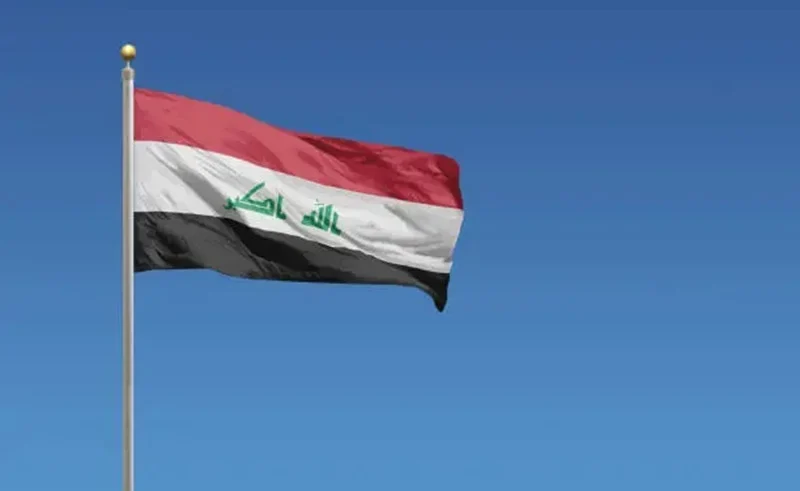
One of the central themes in discussions of Iraq for decades has been conflict, instability, and geopolitical rivalry. However, Baghdad tries to rewrite that story. With the $17-20-billion Development Road Project and the expansion of the world-class port of Grand Faw, Iraq is emerging as the next great logistics and commodity trading hub in the Middle East, and one that will link manufacturing bases in Asia with markets in Europe via a new overland transport corridor.
The Targets are amazing. About 1,200 km in length from the Persian Gulf to the border of Turkey, the Development Road will incorporate high-speed railways, express highways, industrial areas, logistics centres, and anything else that is necessary to make it a multimodal corridor. It could cut loading and unloading time from Asia to Europe by 10 to 15 days, if realized as promised, from the more conventional shipping route around the Suez Canal.
But Iraq’s geographic advantage is also its foray. The country sits at the crossroads of the Gulf, the Levantine region, Anatolia and the region of Central Asia, with each region having an interest in the country’s future.
Iraq’s Geography Is Its Greatest Competitive Advantage
Iraq is a country with one of the most strategic positions. The cargo would then move through Iraq, North to Türkiye and to European markets, heading to Grand Faw Port on the Persian Gulf. This route complements other trade routes and is an appealing option for parties interested in exploring a more direct trade path, as traffic volumes continue to grow, that are looking for alternatives to congested maritime Choke Points.
The increasing disruptions in the Red Sea and rising concerns about maritime security have further emphasized the need for alternative logistics routes. Single-sea-route dependency has become more of an operational risk than a convenience to the manufacturers and shipping firms.
In this evolving global world, Iraq has the chance to evolve from being an oil exporter to much more. It has the potential to transform into a transit economy featuring long-term revenue generation based on logistics, customs, warehousing and industrial development.
Beyond Oil: A New Economic Vision
Iraq’s economy is so oil-reliant that a drop in international energy prices has posed a threat for years. The Development Road is an attempt to diversify the national income and establish a sustainable economy based on other sources rather than oil.
The government estimates that the corridor through development of industrial cities, logistics parks, manufacturing clusters and transportation services could accommodate over 100,000 jobs. The total of non-oil revenues is projected to reach around $4 billion annually, thus providing an additional move away from reliance on hydrocarbons.
The project is not only seen as Iraqi infrastructure but a regional economic project as seen by the willingness of the other countries to finance and develop it, namely Iraq, Türkiye, Qatar, and the United Arab Emirates.
Race Between Competing Trade Corridors
The Development Road won’t stand alone. It joins a proliferation of international inter-connectivity initiatives bidding for investment, traffic and political backing.
Its most prominent competitor is India-Middle East-Europe Economic Corridor aims to link India with Europe via the Gulf countries, Jordan and Israel. Meanwhile, Iran is pursuing other moves to line up alternate transport corridors that would stand out as another Iranian strategic global transportation corridor in the region.
The corridor will not be an alternative for these, but will probably be a component of a larger tangled web of competing trade routes between Iraq and other nations. The hurdle will be gaining investor and logistics industry confidence in Iraq’s reliability as well as its geographical location.
Security Remains the Biggest Test
It is not “just a matter of building infrastructure” to make a country a global logistics hub. Predictability, security and smooth handling of borders are the top virtue of freight operators.
Many parts of the Development Road traverse areas that have suffered from security issues in recent years. Although a general improvement has occurred, if the corridor becomes disrupted by localized violence, sabotage or even by tension between troops in neighboring countries, confidence in the corridor could wilt in no time.
The institutional capacity of Iraq is also very important. Efficient movement of the trucks and trains will depend on the customs modernization, the transparency of regulations, and facilitated border procedures, as well as information on cargo in a digital format.
Catch up on today’s trending updates.
Which Sepang Ticket Fits You?
Check out the best seating options.
Is BYD Financing Worth It?
Find the real repayment costs explained.
How Can Vouchers Save More?
Uncover smart ways to maximize savings.
Why Did Singapore Minister Resign?
See the official statement and details.
How To Check Class Suspensions?
Browse the fastest announcement sources.
Can Iraq Balance Regional Rivalries?
Along with this corridor, Iraq is positioned as a pivot between relationships that the Gulf states, Türkiye and Iran have with each other, as well as investment opportunities in Iraq with investors from all parts of the world. There are different economic interests and are different strategic priorities of each stakeholder.
With respect to the project, Baghdad will have to avoid conflicts and keep the peace of balanced relationship while preventing the project from turning into yet one more battleground for regional rivalry.
The realization of the Development Road will rely on Iraq’s capacity to launch initiatives which are market-oriented and serve all interest groups instead of being geopolitical alliances “aimed at” countries.
FAQs
What does it mean when Iraq is asked about the Development Road Project?
The Development Road Project is a proposed 1200 km-long transport route from Grand Faw Port in southern Iraq to the Turkish border. A network of high speed rail, highways, logistics centers and industrial and trade areas that connect Asia and Europe.
What is the significance of the project on a strategic level?
The corridor could shorten the transit time for cargo carriers between Asia and Europe by 10-15 days, compared with the Suez Canal. It is also one way to uphold an additional trade route and create businesses more resilient and diverse to their supply chains.
Who is the Development Road being supported by?
Iraq is collaborating on the development and financing of main parts of the corridor with Türkiye, Qatar and the United Arab Emirates. Such cooperation and partnerships will boost regional trade linkage and regional economic cooperation.