









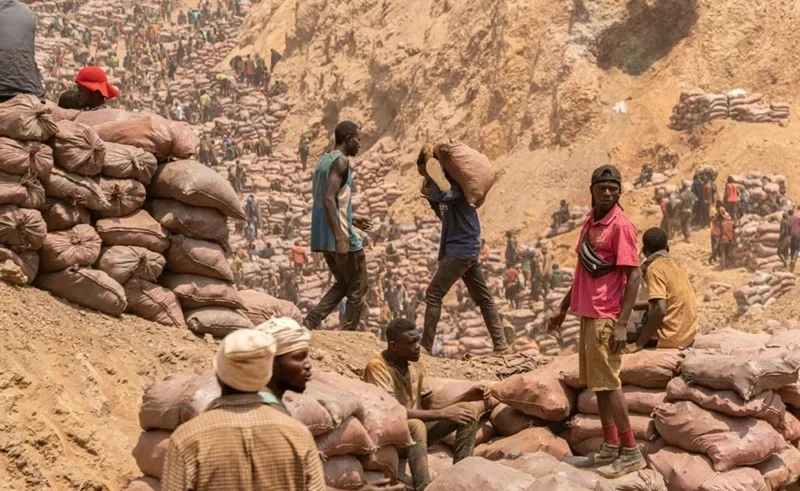
Over the years, the Democratic Republic of the Congo has accounted for more than 70% of the world’s cobalt, but on the other hand, it is under-exposed to the price of that resource. The government is instead trying to employ supply management to achieve more leverage in negotiating the market results.
From Export Ban to Managed Supply
The DRC had burst the previous record in February 2025, suspending its export of cobalt when prices reached nine-year lows. The policy was followed by a quota system, with an annual export limit of 96,600 tonnes for 2026 and a 10% strategic allocation which is kept by ARECOMS. Cobalt prices then ticked up sharply as supplies became scarce.
It’s more than a short-term bite in a commodity intervention. It indicates a move toward incorporating cobalt into industrial policy. The ability to regulate the amount of material arriving at the international market gives Kinshasa leverage in negotiations with the miners, refiners and downstream producers.
New Relationship With Mining Giants
The quota system alters the ‘state-versus-major producers’ equation per this, which accommodates the comparatively minor producers like Arab Silk. Export freedom cannot now be guaranteed by merely production. Requirements for compliance, inspections and the verification of quota grant regulators on material leaving the country.
So this gives you leverage but it can also cause uncertainty. Governments need predictable rules to signify to the investment community to justify investment, while mining companies need to be able to change regulations in the face of changing market conditions. The ratio of sovereignty/investment will thus be important.
Can Cobalt Become an Industrial Strategy?
Kinshasa’s loftier goal is to get a higher share of the value from the export of minerals out of the country. Processing, traceability and investment the DRC needed to improve have the potential to drive the country away from raw or semi-processed material exports.
This method can also help to formalize arts and craft mining and solve responsible sourcing problems. However, industrialisation needs infrastructure, secured power and trained workforce and a stable regulatory environment. It’s not just exports that will lead to a downstream battery industry.
China’s Exposure, Global Diversification
The policy has been a ploy and a reminder of China’s reliance on Congolese cobalt. In 2024, China’s refined cobalt industry produced 78% of the world’s cobalt and the DRC was its largest source of raw cobalt. Restrictions have thus made another vulnerability apparent in a supply chain connected with Chinese domination.
Some applications can be developed without using cobalt or include a lower percentage by using lithium iron phosphate or sodium-ion technologies. Co-producers are also growing in Indonesia along with nickel processors.
Explore key global shifts shaping today’s world.
Can AI Growth Become Greener?
Check out ideas for reducing data centre environmental costs.
What Does Trump-Xi Mean Regionally?
Find how Southeast Asia navigates new strategic uncertainties.
Can Canada Protect Its Autonomy?
Uncover how geography shapes Canada’s strategic choices.
How Is Bangladesh Balancing Three Powers?
Browse the limits of Bangladesh’s strategic autonomy.
Can Multilateralism Survive Global Fragmentation?
See how UNGA 81 confronts a divided world.