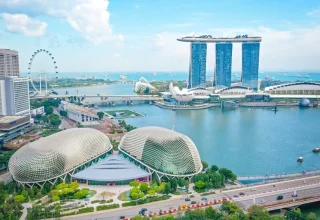

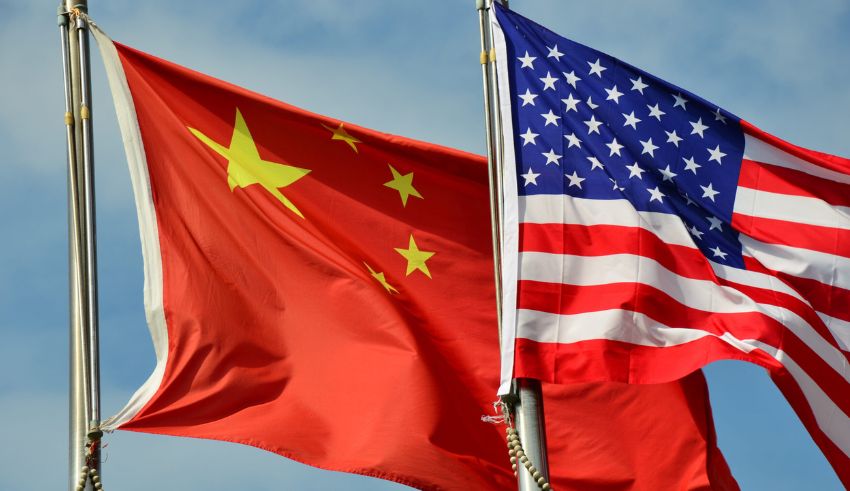
China has made substantial gains recently while the United States has seen a relative fall, underscoring the shifting tides of influence in Southeast Asia. Recent research from Sydney’s Lowy Institute highlights China’s increasing influence in the region, notably in terms of its diplomatic and economic engagement. The United States has issues as a result of this shift, but it also reflects complicated dynamics impacted by geography, economic links, and geopolitical interests.
Numerous causes have contributed to China’s rise in Southeast Asia. The most obvious of these is China’s significant economic involvement in the area. The paper underlines China’s close to $1 trillion trading connection with ASEAN, which offers it a significant competitive edge over the United States. China has been able to exert influence in spheres that were once American strongholds, such as business connections and diplomatic exchanges, because to its economic superiority.
As seen by its leadership in the Lowy report’s category for diplomatic influence, China’s diplomatic influence has also increased. High-level interactions have enhanced its standing as a major diplomatic player in the area. A proactive strategy to involvement has resulted from China’s proximity to Southeast Asia and its strategic importance to the Belt and Road Initiative, which have strengthened its commitment to the region.
On the other hand, the United States confronts difficulties in matching its economic and diplomatic goals with its security participation in Southeast Asia, despite maintaining its leadership in defense networks and cultural influence. The research emphasizes that while U.S. security cooperation has advanced, its economic engagement has lagged. This difference highlights a mismatch between its financial investments in the region and its security obligations.
It’s important to remember that the altered dynamics do not signify the U.S. pulling out entirely of the area. Instead, it emphasizes the necessity for the United States to reevaluate its strategy toward Southeast Asia in light of the complex nature of influence. For the purpose of preserving its strategic alliances and balancing China’s expanding influence, the United States can benefit from its robust military networks and cultural attractiveness.
Keep Reading

Additionally, this shift is influenced by the larger geopolitical environment. China is in a better position to influence events because of its close proximity to Southeast Asia. Although the United States is still actively involved in the world, its ability to deploy resources to Southeast Asia may be constrained by its enormous obligations elsewhere.
The report’s conclusions show that China has become more influential in Southeast Asia in recent years, challenging the United States’ long-standing hegemony in the region. This change in dynamics is a result of China’s diplomatic initiatives, economic might, and closeness to the region. A more balanced strategy is required to ensure a thorough engagement that balances economic, diplomatic, and security objectives, even as the United States continues to maintain its leadership in some areas. The complex interplay of influences in Southeast Asia’s changing geopolitical environment necessitates nuanced policies that emphasize the region’s strategic importance.