

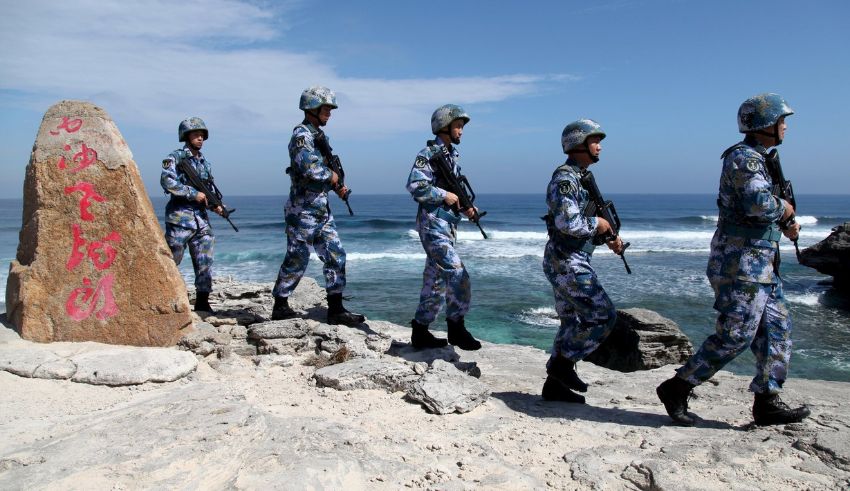
Beijing’s assertive territorial claims in the South China Sea have garnered international attention and raised concerns among neighboring countries. If left unchecked, the situation could potentially lead to a full-blown conflict that could disrupt the fragile regional stability.
As China continues to flex its muscles and bully its neighbors out of their rightful sovereignty over parts of the South China Sea, countries like the Philippines, Vietnam and Malaysia find themselves at the receiving end of a geopolitical power struggle.
Bullying or Sovereignty
China’s claim over 90 percent of the South China Sea, as demarcated by its controversial nine-dash line, is a testament to its possessive stance. The aggressive expansion of its territorial claims by building artificial islands and military bases has not only encroached upon the sovereignty of neighboring nations but has also alarmed the international community.
Analysts agree that China’s actions is a classic example of “might makes right”, in stark disregard for international law and established maritime norms. US Secretary of State Anthony Blinken voiced deep concerns over China’s aggressive actions, urging a peaceful resolution to the territorial disputes. He emphasized the importance of adhering to the United Nations Convention on the Law of the Sea (UNCLOS) and engaging in diplomatic negotiations. According to Blinken, the key lies in respecting the rights of all parties involved, avoiding the use of force, and seeking common ground through multilateral dialogue.
Keep Reading


US Treasury Secretary Janet Yellen echoed these sentiments, highlighting the potential economic consequences of an escalated conflict in the South China Sea. She emphasized that instability in the region could disrupt global trade routes, impacting the world economy at large. This perspective underscores the interconnectedness of economies in today’s globalized world, where stability is crucial for sustained economic growth.
China must recognize that its pursuit of dominance in the South China Sea could isolate it diplomatically, strain its international partnerships, and damage its global reputation. Finding a mutually acceptable compromise is in the best interest of all parties involved, ensuring regional peace and stability, and fostering economic growth.
As such, all parties in this chessboard of geopolitics need to tread cautiously and engage in sincere negotiations. The South China Sea is a litmus test for China’s commitment to global norms and peaceful coexistence. By embracing diplomacy, respecting international law, and considering the welfare of its neighbors, Beijing can reshape its image from that of an aggressor to a responsible global leader.