
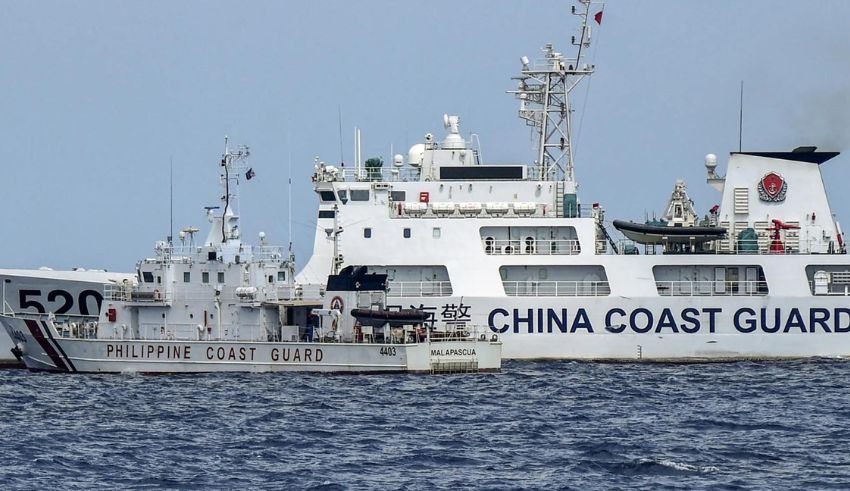
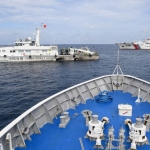
In a latest episode of simmering tensions, the Philippines has strongly criticized China’s coast guard actions in the South China Sea. The contentious event involved what the Philippines characterized as “unprovoked coercion and risky maneuvers,” including the use of a water cannon against a Philippine vessel on a resupply mission near Second Thomas Shoal.
Second Thomas Shoal, known as Ayungin in the Philippines and Renai Reef in China, has been a historical hotspot. The intentional grounding of warships at the shoal serves as a strategic location for the Philippines, leading to regular resupply missions. However, China’s expansive territorial claims in the South China Sea, which include Second Thomas Shoal, have fueled tensions.
Why does China Keep Provoking the PH?
The recent incident saw the Philippines condemning China for jeopardizing lives and raising doubts about its commitment to peaceful dialogue. The Philippines accused China’s coast guard of engaging in extremely reckless and dangerous harassment during the resupply mission, which China countered by claiming the entry of Philippine ships without permission.
Keep Reading
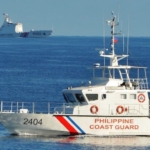
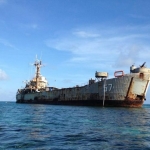
The South China Sea has long been a focal point of maritime disputes between the Philippines and China. Notably, the Permanent Court of Arbitration’s 2016 ruling affirmed that Second Thomas Shoal is within the Philippines’ exclusive economic zone. This ruling has received backing from Japan and the United States, both emphasizing the importance of cooperation to safeguard the region’s freedom.
During his visit to Manila, Japanese Prime Minister Fumio Kishida underscored the need for collaborative efforts among the Philippines, Japan, and the United States. In response to escalating tensions, the Philippines announced intentions to enhance its coast guard capabilities, outlining plans for the acquisition of five multi-role response vessels, with support from Japan.
This incident adds to the complexity of maritime dynamics, with global implications for regional stability. As the South China Sea remains a focal point of geopolitical maneuvering, nations navigate the intricate challenges of disputed waters, raising concerns about the delicate balance in the region.