









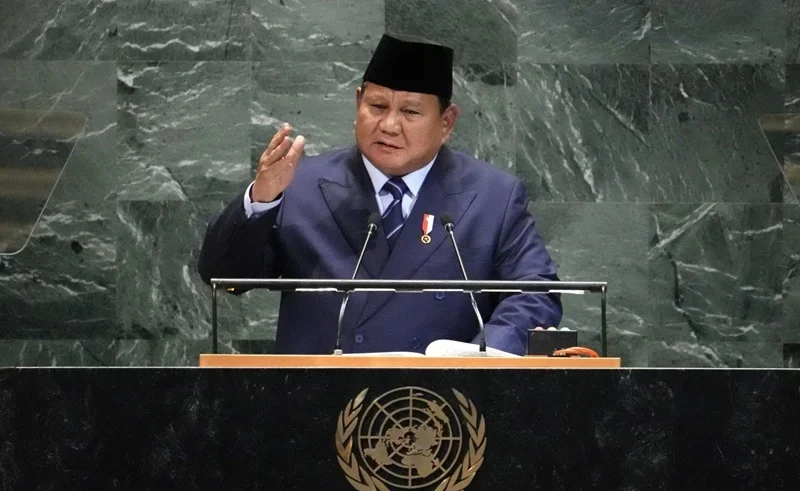
Indonesia’s foreign policy is about to face more challenging times with President Prabowo Subianto. The Bebas-Aktif principle (“Free and Active”) was created to ensure Jakarta’s autonomy and to ensure that it is able to reach out to all major powers. But today, it is becoming harder to balance arms between the great powers.
The concept of ‘rowing between two reefs’ as started by Mohammad Hatta is still very pertinent. Indonesia must not fall into the trap of relying on any bloc, but must also be able to cultivate investment, technology and security partnerships to help move its national interests forward. The strategy of Prabowo seems to be focused on doing exactly that.
China Offers Opportunity, but Creates Strategic Pressure
China is at the center of Indonesia’s economic goals. Beijing is a key trading partner and investor, and has a strong relationship with nickel processing, EV supply chains and sizable infrastructure projects.
These connections aid the development of industry and economy in Jakarta. However, economic bonds should not be removed that would reduce Indonesia’s sovereignty. The North Natuna Sea is a case of caution that business is possible with China, without forgetting the strategic disagreements.
Prabowo’s diplomacy will be put to its first real test. The country must welcome Chinese investment without surrendering the land or sea to them.
US Provides Security Leverage
Washington has another, but significant, role. The cooperation between the two militaries include military drills and joint exercises, professional training and the purchase of new and advanced military equipment, which Indonesia can’t just replace with other assets.
Acti-vities performed like Super Garuda Shield are expected to promote the partnership and also contribute to the military preparedness of Indonesia. However, Jakarta has shied away from joining the clique like QUAD and AUKUS more formally.
“That restraint” is at the heart of the Bebas-Aktif philosophy. Indonesia may attend very closely to America without joining any camp or coalition of Americans.
ASEAN Remains Indonesia’s Diplomatic Anchor
ASEAN is like Indonesia’s protection umbrella between the economic power of China and the security perseverance of the United States. The further involvement of ASEAN in a competitive region offers Jakarta good reasons to maintain its centrality.
Indonesia can help craft an inclusive regional order under the ASEAN framework, and via ASEAN Outlook on the Indo-Pacific, which is ASEAN’s flagship mechanism on the region.
ASEAN unity, however, is not ensured. Conflicts regarding Myanmar and the South China Sea security, along with other tensions in the region, reveal the capacities and beyond of “consensus diplomacy”. Indonesia has to, therefore, be able to balance up the possibility of a leadership with the facts of different national interests.
Five key stories shaping Indonesia’s regional outlook.
Can Natuna Protect Indonesia’s Sovereignty?
Check out the rivalry over resources and waters.
Why Were Chinese Workers Quarantined?
Find out what happened in North Sumatra.
Why Was Quarantine Moved From Natuna?
Uncover why Sebaru Island became the new site.
What Changed Indonesia-Vietnam Sea Borders?
See how the long-awaited maritime deal was reached.
Can Prabowo Balance China And Autonomy?
Reveal how Indonesia navigates great-power competition.
Real Test Is Strategic Autonomy
The most pleasurable aspect of Prabowo’s foreign policy so far is that it is not too simplistic to align with. The trick during a recession is to make sure it’s not weaknesses that become vulnerabilities.
Perhaps Chinese investment is a source of economic risk, and reliance on foreign defense systems restricts strategic self-reliance. Meanwhile, Indonesia’s ability to mediate rests on the ability to be neutral, but needs the leverage of the economy, diplomacy, and strategy.
Prabowo’s “Free and Active” is not simply about taking sides, but rather in giving Indonesia the greatest latitude of maneuver. Perhaps it’s the best thing this strong country has to offer. But in a more competitive age, they will have to rely on diplomatic foresight, economic skills in diversifying their economy and a clear understanding of the national interests of Indonesia in order to preserve that freedom.
FAQs
What is Indonesia’s Free and Active foreign policy?
The Free and Active policy of the Republic of Indonesia aims to establish an independent foreign policy in the midst of the world’s major powers to maintain national interests.
How’s Prabowo’s balancing act between China and the US?
Prabowo’s strategy is to push for economic engagement with China and defence cooperation with the United States, while also remaining non-committal by not entering into any strategic forming of alliances.
What are the reasons behind ASEAN’s significance towards Indonesia?
ASEAN gives Indonesia a regional forum for stability, ensures the centrality of ASEAN and reduces competition between the great powers in the region.