

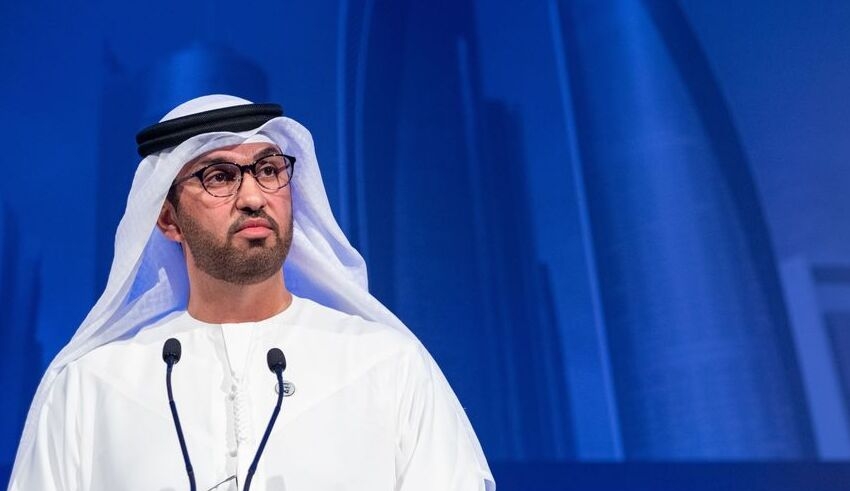
Many environmentalists laughed when the United Nations announced that the United Arab Emirates would host its 2023 climate summit, known as COP. A climate summit in an oil state? The laughter grew louder when the UAE announced that Sultan Al Jaber, the chairman of its national oil firm, would become president. Al Jaber is precisely the type of ally the environmental movement needs, therefore environmentalists should stop complaining.
During a recent trip to India, Al Jaber emphasized the magnitude of the forthcoming task. He expressed the UAE’s desire to assist India in achieving its ambitious clean energy objectives. He advocated for increased investment in decarbonization technologies, such as nuclear and hydrogen energy. In addition, he supported an all-society approach that mobilizes all sectors and places greater demands on development banks and financial institutions.
During the worldwide transition to clean energy, he also addressed the elephant in the room: the necessity of mitigating the climate impact of fossil fuels. “There is no conflict of interest,” he stated, pointing to his detractors. “It is in everyone’s best interest for the energy industry to collaborate with everyone.”
Al Jaber’s detractors prefer to dismiss the undeniable fact that the globe will continue to require oil and gas for some time. As Al Jaber put it, combating climate change does not require an immediate end to all oil and gas production, but rather the development of sufficient clean power to phase it out as quickly as possible, and doing so in a way that strengthens economies and raises living standards through policies that are “both pro-growth and pro-climate.”
Keep Reading
Al Jaber has a financial investment in oil extraction, but he also has a stake in the renewable energy sector. He is the founder CEO and current head of Masdar, which aspires to generate 100 gigawatts of renewable energy by the end of the decade, a goal that exceeds those of several of the larger European countries. If every nation planned to create as much renewable energy per capita as the UAE over the next seven years, the fight against climate change could be revolutionized.
To their credit, the majority of world leaders, including President Joe Biden’s special climate envoy John Kerry, have backed Al Jaber’s selection and the UN’s choice to hold this year’s COP in the UAE. Yet, skepticism is inevitable, which places Al Jaber under further pressure to deliver.
As he prepares for the summit in November, Al Jaber must intensify pressure on wealthy nations to honor their financial obligations to the developing world, urge development banks and sovereign-wealth funds to expand their ambitions, and assist in removing obstacles to greater private-sector investment in clean-energy projects, particularly in the developed world.
He may also remove some of the public’s doubts about his selection by targeting coal-fired power facilities, the greatest impediment to significant climate progress. Renewable energy is now less expensive than coal power in the majority of the world, and when coal still has a pricing advantage (typically due to subsidies), new public-private partnerships — such as the one the G-20 formed with Indonesia last year — can help nations accelerate the transition.
However, there is a difference between delivering an effective speech and motivating the world to action. In light of this, it was encouraging to hear Al Jaber emphasize in his remarks that this year’s summit must be “a COP of action” that advances the globe “beyond talking about goals to really achieving them.”
Environmental activists will properly hold Al Jaber accountable for putting words into action, but they should also recognize that considerably more can be accomplished by accepting him as an ally as opposed to dismissing him as an adversary.
Also Read:- Indonesia tightens security in Papua after ten people are killed in a riot