

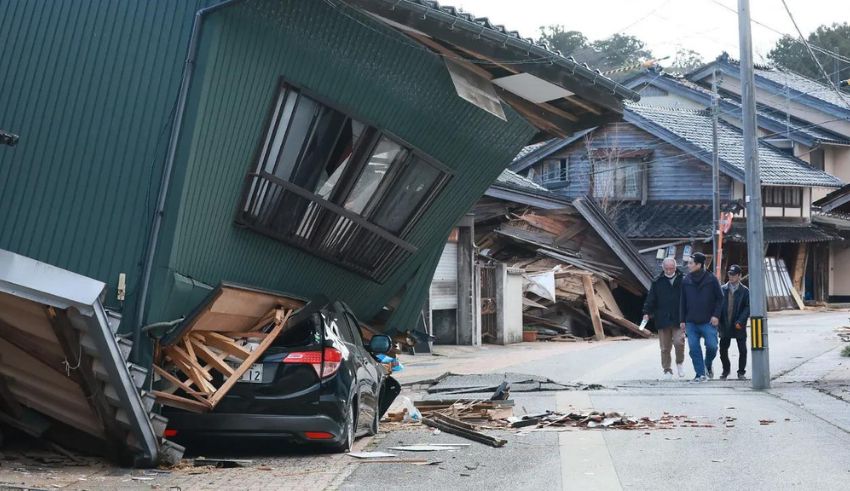
China’s official and online responses to Japan’s earthquake showed a stark contrast between the diplomatic and the nationalist views of the two countries’ relations.
While the Chinese government expressed sympathy and support for Japan, the Chinese public and media showed hostility and indifference, and even celebrated the disaster as a deserved punishment for Japan’s past and present actions.
The official response: sympathy and support
The Chinese government, which has been trying to improve its strained relations with Japan, responded to the earthquake with sympathy and support. The Chinese Foreign Ministry spokesperson, Zhao Lijian, said that China was ready to provide assistance to Japan if needed, and hoped that the Japanese people could overcome the difficulties and restore normalcy as soon as possible. The Chinese President, Xi Jinping, also sent a message of condolence to the Japanese Prime Minister, Fumio Kishida, expressing his sorrow and solidarity².
The official response reflected China’s diplomatic efforts to mend ties with Japan, which have been marred by historical grievances, territorial disputes, and strategic rivalry. China and Japan, which are the second and third largest economies in the world, respectively, have been seeking to cooperate on trade, investment, and regional issues, such as the denuclearization of North Korea and the fight against climate change. China and Japan have also been trying to manage their differences over the East China Sea islands, known as Senkaku in Japan and Diaoyu in China, which are claimed by both countries³.
The official response also demonstrated China’s recognition of Japan’s importance and influence in the region and the world, and its desire to avoid further escalation and confrontation. China, which has been facing criticism and pressure from the United States and its allies over its human rights violations, its assertiveness in the South China Sea, and its handling of the COVID-19 pandemic, has been seeking to improve its image and reputation, and to promote its role as a responsible and constructive power.
Keep Reading




The online response: hostility and indifference
The online response, however, contrasted sharply with the official response, as many Chinese netizens and media outlets expressed hostility and indifference towards Japan’s earthquake, and even rejoiced over the disaster as a deserved retribution for Japan’s past and present actions. On Weibo, China’s equivalent of Twitter, many users posted comments such as “They deserve it”, “Karma is a bitch”, and “God is punishing them for their sins”. Some users also referred to the earthquake as a “gift” for the Lunar New Year, or as a “warning” for Japan to stop interfering in China’s affairs.
The online response reflected China’s deep-seated resentment and animosity towards Japan, which stems from Japan’s brutal invasion and occupation of China during the Second World War, and its perceived lack of remorse and apology for its atrocities and crimes. Many Chinese people also harbor grievances over Japan’s revisionist textbooks, its visits to the Yasukuni Shrine, which honors war criminals, and its attempts to revise its pacifist constitution and expand its military capabilities.
The online response also demonstrated China’s nationalism and chauvinism, which have been fueled by the state propaganda and the social media echo chambers. Many Chinese people view themselves as superior and righteous, and see Japan as an inferior and evil enemy. Many Chinese people also believe that China is the victim and the leader of Asia, and that Japan is the aggressor and the follower of the West.
The online response, therefore, was not only a diplomatic faux pas, but also a cultural insult that could damage China’s reputation and credibility in Japan and the world. Moreover, the online response could also affect China’s political and strategic interests in the region, as Japan is an important ally and partner in dealing with the issues of North Korea, China, and climate change. Japan and China have established a strategic partnership since 2004, and have cooperated on various fields, such as security, science, culture, and education.
China’s official and online responses to Japan’s earthquake, therefore, showed a difference between the diplomatic and the nationalist views of the two countries’ relations. The difference could have implications for the future of the bilateral ties, as well as the regional and global stability. China should learn from this mistake and respect the symbols and values of other countries, especially those that it considers as friends and partners.