
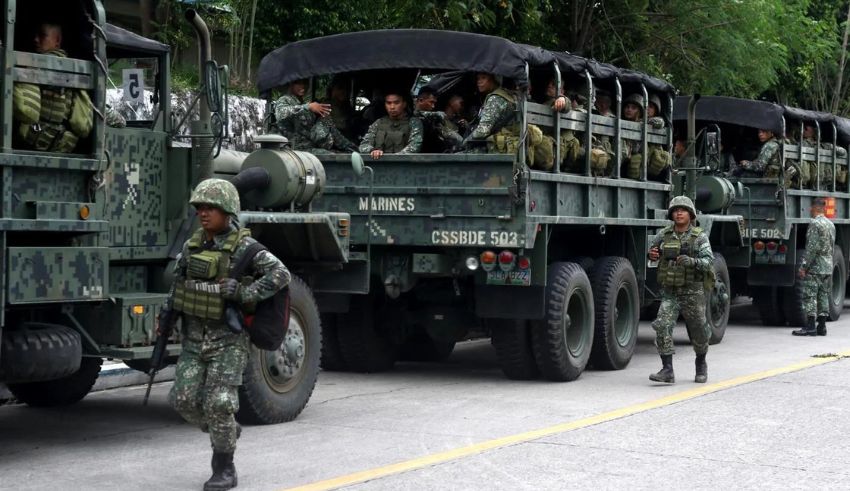
In a remarkable move to fortify its digital defenses, the Philippines’ defense chief has issued a bold directive, instructing military and department personnel to steer clear of AI-driven applications for creating personal portraits online. The measure comes in response to concerns about identity theft and cybersecurity perils intertwined with artificial intelligence.
Security at the Forefront
A memo, dated October 14 and bearing the signature of Defense Secretary Gilberto Teodoro Jr., raises apprehensions about AI-related identity theft, prompting the prohibition. The directive reads, “All staff within the Department of National Defense and the Armed Forces of the Philippines are hereby advised to abstain from employing AI photo generator apps and to exercise utmost vigilance when divulging online information.”
The AI app in question, which mandates users to provide a minimum of ten photos for crafting enhanced portraits, raises significant concerns regarding privacy and security.
The Dark Side of AI Applications
Teodoro’s memorandum doesn’t mince words. It underscores the application’s capacity to amalgamate user data and fashion a virtual persona that convincingly emulates human speech and movement.
The striking concern is that this seemingly innocuous AI application could be exploited for nefarious purposes. The memo spotlights the threat of concocting counterfeit profiles, subsequently setting the stage for identity theft, social engineering, phishing, and a host of other malicious endeavors. Cybersecurity maven Ashley Acedillo echoes the necessity and timeliness of these precautions.
Acedillo emphasizes the alarming prospect of counterfeit videos depicting individuals accessing sensitive and confidential data, an alarming security risk.
Keep Reading


Rising Cyber Perils
The Philippines has recently grappled with a surge in cyberattacks targeting government institutions, including the lower house of Congress, the Philippine Health Insurance Corporation, and the Philippine Statistics Authority. This escalating digital threat landscape has impelled the military to establish a groundbreaking cybersecurity command, alongside a recruitment drive for IT experts, a measure deemed vital to counter the surging menace of cyberattacks.
As General Romeo Brawner, the Philippine military chief, discloses, the armed forces find themselves in the crosshairs of daily assaults launched by both local and foreign hackers. The specifics of these hacking origins remain undisclosed. Nonetheless, a pertinent fact remains that two years ago, malevolent actors successfully infiltrated military servers, exfiltrating “dated files” and non-sensitive documents.
A Global Challenge
The backdrop of this unique directive underscores a global conundrum. Worldwide, the sinister specter of malicious cyberattacks, orchestrated by state and non-state actors, is on the ascendant. This presents a formidable challenge, necessitating substantial investments by nations and corporations into cybersecurity defenses. In the midst of this, AI-driven image-generating applications have inundated social media, fanning concerns about counterfeit content proliferation and the rapid dissemination of online disinformation.
It’s worth noting that these AI image generators, like nearly all technology, possess dual-use capabilities, capable of being wielded for both constructive and destructive purposes. Malicious actors can exploit the data reservoirs uploaded into AI image generators to craft deceptive but convincingly realistic social media profiles, setting the stage for scams. Further, scammers can harness AI’s prowess to craft authentic-looking images to solicit donations during calamities and natural disasters, as highlighted by Analytics Insight, a California-based AI-focused magazine.