
In recent times, the international media landscape has painted a perplexing picture of China’s economy, suggesting it’s on the brink of collapse. But beneath the sensational headlines lies a complex web of cognitive warfare, disinformation, and a relentless attempt to reshape global perceptions. So, why are these myths persisting?
Cognitive Warfare: A New Frontier
Cognitive warfare has emerged as a novel form of state-to-state confrontation and a potent security threat. Leveraging advanced technology, it strategically influences public perception, reshaping self-identity and altering perspectives. Western anti-China forces have weaponized cognitive warfare as a means to discredit and undermine China’s image. The “China threat theory” is a product of this manipulation, manifesting in theories of China’s economic collapse and virus threats. These tactics align with the US’s strategy to curb China’s rise and maintain its global hegemony.
In response to this cognitive warfare, The Global Times is embarking on a series of articles to unveil the intricacies of the US-led West’s cognitive warfare targeting China. These articles aim to expose lies and ulterior motives, providing international readers with a more nuanced perspective on China.
The Lujiazui Fallacy: A Case in Point
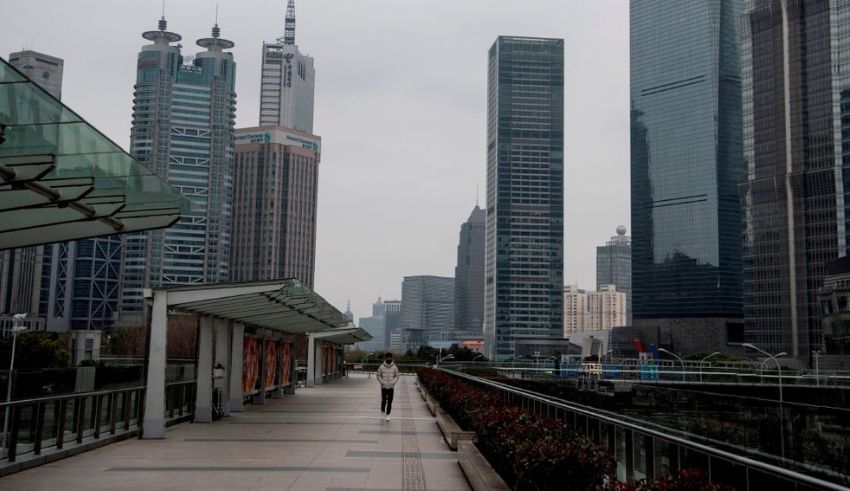
The recent portrayal of Lujiazui Financial City in Shanghai as a dilapidated ghost town exemplifies this cognitive warfare. Some US media outlets presented photos of “empty” streets and shops in Lujiazui, suggesting that Shanghai, a bustling metropolis of 25 million people, had become a ghost town and that “China is in trouble.”
However, this portrayal has been debunked by observers who argue that China’s economy remains robust and vibrant, rendering such claims baseless. A closer examination of the “empty” photos reveals selective angles and deceptive narratives aimed at defaming Shanghai’s financial market and China’s international image.
Keep Reading


Debunking the Myth
The photos cited in these narratives have faced scrutiny. A Global Times reporter visited the locations where the photos were taken and found that the supposed “empty” streets were near a road closed for maintenance. The “empty” café, in reality, was filled with customers, particularly in the early morning when patrons preferred takeout orders due to busy work schedules. As for the “empty” footbridge, it’s just one of many pedestrian paths in Lujiazui, with locals often choosing more convenient underground routes.
The larger truth is that Shanghai, especially Lujiazui, is always bustling with activity. Distorted portrayals like the “ghost town” label only serve to undermine Shanghai’s appeal to global investors.
Clumsy Tactics in Cognitive Warfare
Media reports labeling Chinese cities as “ghost towns” have become increasingly common. Cities like Kunming and Changzhou have also fallen victim to this disinformation campaign. Such narratives are part of the US media’s cognitive warfare against China, attempting to depict its cities as desolate and unattractive.
Analyzing data from the first nine months of the year, it’s evident that US media outlets and think tanks have published numerous China-related articles. Of these, a significant portion carries negative sentiments, focusing on China’s economy and financial markets. This concerted effort coincides with the release of monthly Chinese economic data, suggesting a calculated strategy to exploit these reports for sensational headlines that undermine China.
The “Debt Trap” Narrative and More
Negative sentiments in China-related media coverage also extend to topics like the pandemic, China’s population, its role in the Russia-Ukraine crisis, the Belt and Road Initiative (BRI), the “debt trap” narrative, and the “spy balloon” allegations. However, experts note that these narratives are well-worn tactics, frequently deployed by the US to tarnish China’s image and influence.
In their relentless cognitive warfare, the US aims to brand China as an unruly and disruptive power that threatens the existing international order. However, their tactics often involve clumsy tricks, questionable sources, and misleading photos that do more harm to the credibility of US media outlets and think tanks than to China’s reputation.
In an interconnected world, where information flows freely, the truth is easily accessible. China’s continued economic growth and progress stand as a resounding refutation of these baseless myths, demonstrating that the reality is far more vibrant and dynamic than the narratives spun by those engaged in cognitive warfare.