

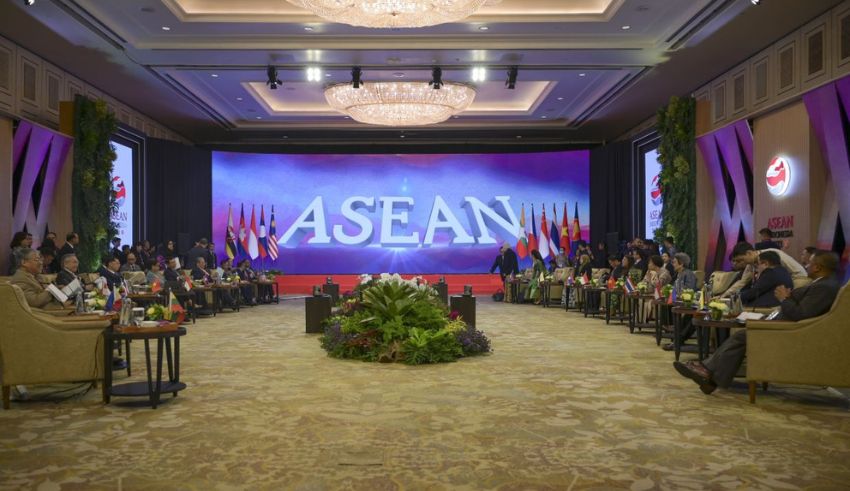
The Association of Southeast Asian Nations (ASEAN) has faced many difficulties due to the ongoing crisis in Myanmar, which began in February 2021 after the military takeover. Despite several attempts to resolve the issue, a brutal civil war involving the military junta, the civil opposition, and different ethnic groups has broken out, leaving tens of thousands of people dead and millions internally displaced. The significance of an amicable conclusion to the Myanmar problem for ASEAN is explored in this article, with particular attention to its socioeconomic and political ramifications and the requirement for increased cooperation with partner nations beyond the region.
Due to Myanmar’s political unrest, ASEAN’s ambition to create a cohesive and equitable economic community is hindered. The ASEAN Economic Community (AEC) plan aspires to establish a unified market and manufacturing base, fostering regional economic development that is both competitive and equitable. AEC implementation has been impeded by the turmoil in Myanmar, jeopardising ASEAN’s capacity to meet its socioeconomic goals. Over a million people in Myanmar have been internally displaced due to the violence, further putting strain on regional peace.
The ASEAN organisation’s cohesion and legitimacy as a regional entity are seriously threatened by the failure to address the Myanmar situation. Following the coup, ASEAN nations and the Myanmar junta came to an understanding of the Five Point Consensus, which outlined methods to end the conflict peacefully. However, the junta’s refusal to abide by the agreement has led to disagreements within ASEAN regarding how to continue engaging with Myanmar. Concerns were raised regarding ASEAN’s ability to bring about a visible peace during Indonesia’s term as chair after the last high-level summit produced nothing in the way of results.
Keep Reading

ASEAN is at a crossroads, and it could be time for the group to admit that working with outside parties is necessary to end the situation in Myanmar. Even though the ASEAN non-interference policy tenet forbids it, Western nations have already used economic sanctions to pressure the junta. In retaliation, ASEAN may consider coordinating its efforts to reach an agreement with Western sanctions, promising to lift them if talks make headway. ASEAN and its partner nations must agree to this and be committed to it.
The ongoing failure to address the Myanmar conflict has raised concerns about ASEAN’s ability to foster collaboration, stability, and economic growth within the region. In addition to impeding ASEAN’s socioeconomic goals, the crisis seriously jeopardises the group’s cohesion and credibility. To find a peaceful solution to the problem, ASEAN must seriously consider cooperating with outside parties. Indonesia, which now has the chairperson, has a unique chance to use its diplomatic influence to start new initiatives and encourage collaboration with partner nations, supporting efforts to alleviate the situation in Myanmar and uphold ASEAN’s position in modern world politics.