









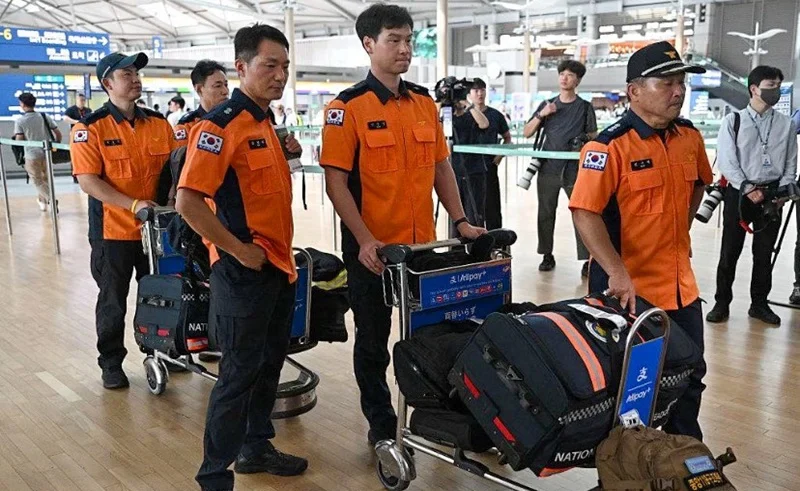
As rescue efforts ramp up in Nepal following devastating floods and mudslides in the Himalayas, a team of 44 South Koreans is heading to the country to help. With the equipment and search dogs on board, the Korea Disaster Relief Team (KDRT) will depart from Seoul around midnight on Sept. 1 by military KC-330. The deployment is in response to a request from Nepal for aid as rescuers seek thousands of people who are missing, including nine South Korean nationals.
South Korea Sends 44-Member Emergency Team to Nepal
The South Korea Nepal flood relief team is comprised of experts from the Foreign Ministry, Korea International Cooperation Agency (KOICA), National Fire Agency and other agencies.
The team is scheduled to touch down in Nepal at 5:55 am local time on September 2, according to the South Korea’s Foreign Ministry. It will transport about 700 pieces of equipment, plus five search-and-rescue dogs.
The KDRT will stay in Nepal for approximately 10 days, cooperating with the Nepalese authorities in search and rescue and other emergency operations. This will be the statutory disaster-response unit’s 12th deployment to an overseas disaster site.
Read Yonhap’s latest report on the deployment
Nepal Floods Leave Massive Destruction
The catastrophe started on August 26, 2026, with devastating floods in the north-central Himalayas of Nepal close to the Tibet border.
The tragedy continues to escalate, as indicated by the latest reports. AP reported on September 1st that at least 987 people in Nepal were confirmed dead and 3,916 were missing, including several hundred foreigners. Over 11,000 persons were rescued.
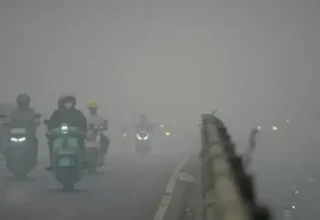
The flooding was caused by a collapse of a glacier in the Himalayas, which released water, and led to landslides and debris into communities below the glacier. The roads, bridges and hydropower facilities were badly damaged, making access to remote areas extremely difficult.
Nine South Koreans Remain Missing
The South Korean emergency team in Nepal will be looking for nine South Koreans who are missing.
There are six Doosan Enerbility employees and three Korea South-East Power employees who are not included in the missing group. They came upon the floods while they were at a construction site for a hydropower plant in Rasuwa district in Nepal.
The South Korean rapid-response team has already carried out search operations on the ground and from the air via helicopters and drones but officials have stated that there has been no significant progress in finding the nine.
President Lee Orders More Resources for Nepal Rescue
South Korean President Lee Jae Myung has instructed authorities to do everything possible to speed up the search.
At the Cabinet meeting on September 1, Lee requested officials to prepare for the deployment of more rescue staffs and equipment including helicopters, while keeping the Nepalese government and the companies engaged.
He also emphasized the need for rescuers to be vigilant of secondary flooding and worsening weather conditions.
Prior to this larger deployment of KDRT, the Korean government announced humanitarian support of US$1 million to Nepal via international organisations.
The South Korean presidency earlier stated that Lee had ordered government officials to use whatever resources were available, to engage with Nepal’s government and look at further humanitarian aid.
Read the South Korean presidential briefing on the Nepal flood response
Why Nepal’s Rescue Operation Is So Difficult
The Nepal floods 2026 have created extraordinary challenges for emergency crews.
Roads and tunnels at the destroyed hydropower sites are clogged with mud and debris. Temporary bridges have been built to access isolated areas and specialist teams are searching for survivors by using drones and search equipment.
Hydropower sites are among the most challenging sites. In some cases, tunnels are so filled with mud and debris that they make it hard to access and operate drones.
The deployment of the South Korean unit, then, brings in a special international search-and-rescue capability at a time when Nepal’s home-based emergency services are spread out across five disaster zones.
Asia’s Biggest Stories Worth Following
How Severe Are Nepal’s Floods?
Check out the latest death toll and rescue efforts.
Can Ternus Take Apple Beyond iPhone?
Find out how Apple could evolve beyond smartphones.
How Is India Deepening ASEAN Ties?
Uncover India’s renewed engagement with Southeast Asia.
Can ASEAN Strengthen Regional Connectivity?
Explore new infrastructure and digital connectivity plans.
What Will Singapore Prioritize For ASEAN?
See the key trade and business priorities ahead.
South Korea’s Nepal Flood Response Expands
The 44-member deployment represents a significant expansion of Seoul’s response.
On August 27, South Korean authorities dispatched a smaller team of government officials to search for the missing nine Koreans. President Lee then called for the consideration of wider support for Nepal and Kathmandu later sought help in search and rescue operations.
The new mission will be aimed at two things: Nepal’s national humanitarian crisis and the continued desperate search for the missing South Korean workers.
FAQs
How many South Korean rescuers are being sent to Nepal?
South Korea is sending a 44-member Korea Disaster Relief Team, supported by five search-and-rescue dogs and around 700 pieces of equipment.
Why is South Korea sending an emergency team to Nepal?
Nepal requested assistance following the devastating floods. The team will support wider rescue operations while searching for nine missing South Koreans.
How long will the South Korean team stay in Nepal?
The KDRT is expected to conduct operations for approximately 10 days.
What caused the Nepal floods?
The catastrophic August 26 flooding was linked to a glacial collapse in the Himalayan region, which unleashed water and debris into valleys below.