









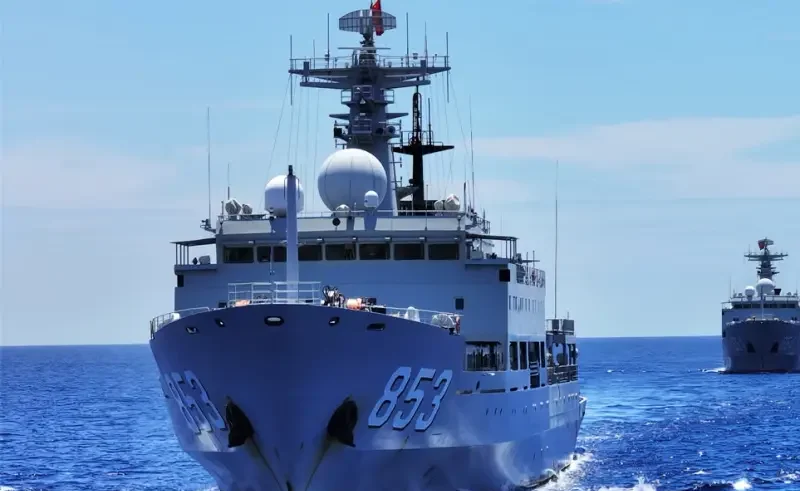
China’s growing PLA Navy is reshaping the strategic environment of the Indo-Pacific, and threatening the existing power dynamics. Beijing’s investment in aircraft carriers, advanced warships and naval technologies have come to reflect its ambitions. China’s growing presence has, however, raised concerns with its neighbours on maritime security and territorial disputes, together with the future of regional stability.
China’s PLA Navy Expansion Changes Regional Power
China’s naval modernization has rapidly progressed with the advanced destroyers, the submarine class and the aircraft carriers. In November 2025, Fujian, China’s third aircraft carrier, was commissioned, boosting its naval strength. While ship tonnage and experience remain advantages for the United States Navy, CSIS research shows that China has more ships than the United States Navy.
South China Sea Tensions Raise Security Concerns
Expanding naval presence in the South China Sea has created consequences, especially as tensions simmer in the region. Expansion of China’s naval forces in the South China Sea has created consequences, especially as tensions boil over in the region. China has disputed claims over the seas that share a border with a number of south-east Asian nations. Increased Chinese military activity around Taiwan, Japan and contested waters in 2025 raised concerns about regional security, according to a 2026 ChinaPower assessment.
US and Regional Allies Reassess Maritime Strategies
China is increasingly developing its presence in the Indo-Pacific, which is leading to the reconsideration of maritime capabilities in the United States, Japan, Australia and the Philippines. The participation in joint exercises, cooperation in defence and technological investments become an important criteria in the planning of regional security. Increased capabilities to operate aircraft carriers beyond nearby waters are increasingly coming to China’s attention, according to CSIS research.
Regional Stability Requires Diplomacy and Deterrence
But China’s naval expansion does not necessarily lead to war. However, the more capabilities that are added to the military, the more critical the need for communication, transparency and crisis management. The governments of the regions should practice credible deterrence and also engage in diplomatic dialogue and respecting international maritime law. The ultimate goal of sustainable security in the Indo-Pacific is to avoid miscalculations and to safeguard legitimate national interests.
FAQs
Recommended Reads
Can Europe Compete With China Without a Trade War?
Can Europe Counter China’s Manufacturing Rise Without a Trade War?
How Are China and Russia Reshaping Arctic Trade?
China and Russia Are Turning the Arctic Into a Strategic Corridor
Why Is the Pacific Becoming a China-Taiwan Battleground?
Pacific Islands Forum Becomes New Battleground for China-Taiwan Rivalry
Can India Separate Trade From Border Tensions?
India-China Trade vs. Border Tensions: How Delhi Decouples Economics from National Security
What Does Xi’s Egypt Visit Mean for China?
Xi Jinping Egypt Visit Signals China’s Growing Influence in the Middle East