
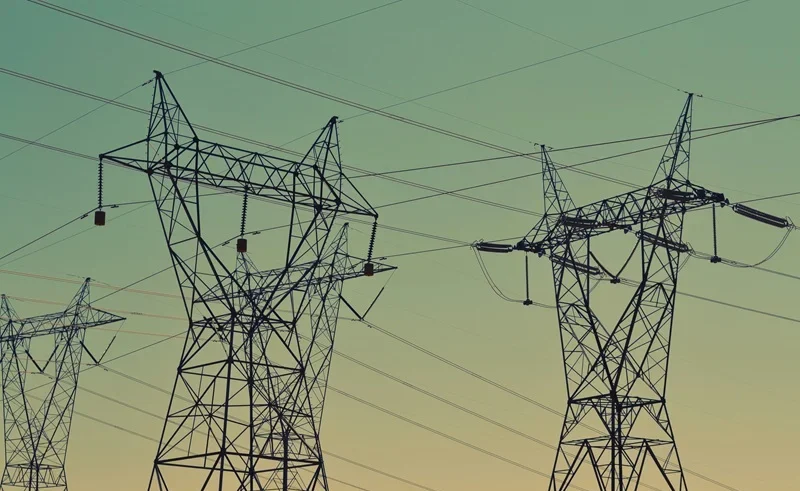
As Southeast Asia collaborates on building a stronger, more sustainable energy sector, the ASEAN Power Grid has entered into a new frontier. Within the framework of ASEAN Plan of Action for Energy Cooperation 2026–2030, the member countries are taking steps to go beyond bilateral electricity exchange and construct an integrated Power market system that will facilitate the long-term economic growth and decarbonisation in the region.
The key to this change is the intercountry sub-marine transmission lines. The project will serve Southeast Asia’s Island economies that will be better able to access renewable energy in the region and to reduce energy vulnerability.
Why Submarine Power Cables Matter?
Renewable energy resources in Southeast Asia are found in specific areas of the region and do not occur everywhere. In Lao PDR, there are plenty of hydropower potentials, while Indonesia and the Philippines have significant geothermal and solar resources, dispersed in thousands of islands. At the other end of the scale, urban economies such as Singapore face challenges in developing its renewable energy generation capability due to limited land resources and increasing reliance on imported renewable energy.
High-voltage cables link together disprepared national electrical grids, leading to the term ‘Submarine high voltage cable‘. In addition to the terrestrial network, they are part of an integral system, which facilitates the transfer of electrical power to other countries efficiently and reliably.
Major ASEAN Power Grid Projects
The Lao PDR–Thailand–Malaysia–Singapore Power Integration Project (LTMS-PIP) of the region is one of the flagship projects. Multilateral electricity trade has already reached 200 MW with plans to expand to another Malaysia-Singapore subsea connecting line that will deliver at least 1,000 MW by 2029.
One of the substantial proposals is that of the installation of a high-voltage cable connecting Sumatra and Peninsular Malaysia in the Malacca Strait. Future cross-border electricity exchanges are likely to be enabled by the completion of joint feasibility studies by Tenaga Nasional Berhad, the country’s PT PLN, as well as the ASEAN Centre for Energy by 2027.
In the BIMP-EAGA, further investigations of subsea links in the Sulu and Celebes Seas were conducted. These projects are intended to project solar and hydro electric generation from Sabah, Sarawak, Brunei to the southern Philippines.
Engineering and Financial Challenges
The construction of electricity networks beneath the oceans is much more difficult than building electricity networks above the ground. Technical difficulty arises from deep-sea trenching, different sea beds, the heavy movement of traffic on the sea, as well as from changes of weather in different seasons.
Also, the cost is significant; it has been estimated that submarine cable is three to five times as costly per km as on-land transmission. To counter this, ASEAN is recommending blended financing under the framework of the ASEAN Power Grid Financing Initiative (APGF) and also seeks support from the international development community and private investors.
Another challenge is regulatory coordination. In Electricity markets, electricity can pass through several countries, where national grids need to be harmonized, wheeling rules must be consistent and uniform and the renewable energy certification system must be standardized in order to have a consolidated market.
Explore more key ASEAN developments.
Why Is Myanmar Still Stalled?
Dive into the ongoing diplomatic deadlock.
Why Did China Reject Talks?
Find what sparked the latest dispute.
Why Does North Korea Agree?
Uncover its support for ASEAN’s role.
How Will Tariffs Change Trade?
Check out the export impact ahead.
What Happened At Manila Meeting?
See the key trade and policy discussions.
Growing International Cooperation
International collaboration is growing in importance in achieving faster progress towards ASEAN’s clean energy goals. At the UK-ASEAN Renewable Energy and Interconnection Symposium on 29 th July 2026, ASEANA Secretariat.
The symposium also highlighted, among others, the PACE and robust public-private partnerships to attract investments for regional grid infrastructure.
FAQs
What is the ASEAN Power Grid?
The ASEAN Power Grid is an ASEAN regional power grid in which, once successfully completed, the project will enable the linkage of ASEAN national power grids, thus allowing ASEAN members to trade electricity across country boundaries and ensure energy security.
Why are submarine power cables important?
These power cables can now be installed underwater, between islands or between power grids, fulfilling the role of transporting renewable energy across the sea in the places where it is not possible to do so via overhead cables.
What does the LTMS-PIP project mean?
ASEAN is currently implementing its flagship multilateral electricity trading project, Lao PDR–Thailand–Malaysia–Singapore Power Integration Project, which is projecting electricity power across four countries, and is set to expand its capacity.