
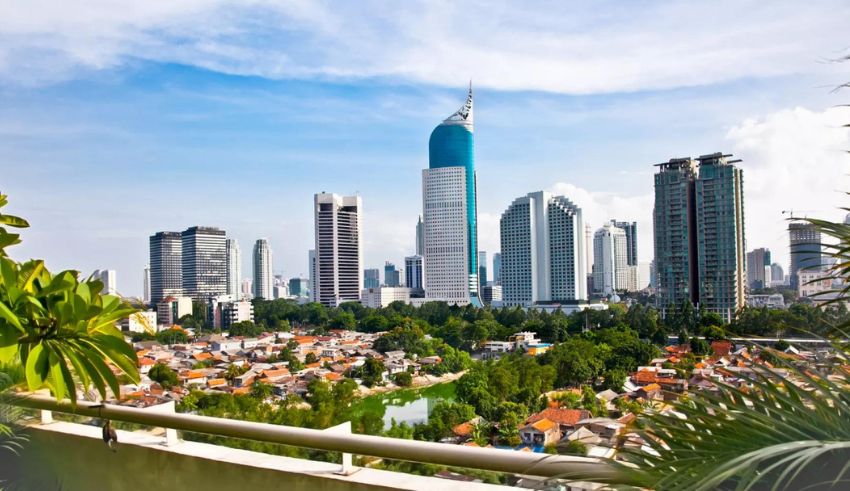
Back in 2019, the global economic stage witnessed a shift that sent tremors through Indonesia’s political echelons. The World Bank’s revelation struck a nerve – amidst the intricate dance of US-China trade tensions, Indonesia seemed to have missed its cue to join the bustling global manufacturing supply chains.
The World Bank’s 2019 report painted a disconcerting picture: out of 30-plus Chinese companies eyeing overseas expansion, not a single one had Indonesia on its radar. Foreign direct investment (FDI) into Indonesia, as a slice of its GDP, dwindled between 2012 and 2019, while neighboring countries like Vietnam, Malaysia, the Philippines, and Thailand were riding the FDI wave. Interestingly, the bulk of FDI in Indonesia was veering away from manufacturing sectors.
President Joko Widodo, gripped by a sense of urgency, took bold strides. In the subsequent year, he unfurled the “omnibus law,” an all-encompassing legislative makeover affecting over 70 laws, from labor to tax, with the aim of slashing red tape and rendering Indonesia more enticing to foreign investors.
The Omnibus Law Controversy
Yet, the omnibus law didn’t escape controversy. While corporations lauded the trimmed corporate tax rates and smoother business rules, dissenting voices decried its impact on worker rights. The law, nonetheless, mirrored Indonesia’s aspiration to position itself as a pivotal player in international supply chains. With the world’s fourth-largest population, the fifth-largest economy in Asia, and bountiful natural resources, Indonesia was poised for success.
President Widodo, at the helm since 2014, grappled not just with legislative changes but also with broader structural hindrances. Power outages, transport glitches, and water supply inadequacies plagued the archipelago, dissuading multinational corporations reliant on dependable infrastructure. Innovation and more streamlined production processes were a pressing need in many industries.
A scarcity of skilled talent added to the conundrum. Nadiem Makarim, the education minister since 2019, acknowledged the imperative need to revamp the education system. Literacy and numeracy levels lagged behind neighboring countries, posing a challenge to attracting high-tech manufacturing industries.
Makarim stressed the importance of commencing with lower-tier supply chain activities before venturing into high-end tech manufacturing. The absence of precedents in certain industries made it challenging to attract them without a gradual progression.
Despite reforms, Indonesia grappled with a business environment prone to rapid regulatory changes. In September, ByteDance, the parent company of TikTok, faced an abrupt suspension of its online shopping service in Indonesia, underscoring the capricious nature of the regulatory landscape. Foreign ownership laws, often demanding a local business partner, and stalled projects added further intricacy.
Keep Reading


Saying Goodbye to China
As Indonesia positioned itself in the redirection of global supply chains away from China, geopolitical shifts played into Jakarta’s hands. Following a recent meeting between US President Joe Biden and President Widodo, the US hinted at considering Indonesia as a partner in forming a global semiconductor value chain.
The commodities sector emerged as a beacon of hope in Indonesia’s economic panorama. Record FDI of $22 billion in the preceding year was dominated by metals and mining. Indonesia’s role in the global electric vehicle supply chain gained prominence, fueled by its ample nickel reserves, a critical component for the industry. Companies like Ford, Hyundai, Vale, and Tsingshan invested in domestic battery and EV manufacturing plants.
However, as Indonesia approached a pivotal national election in the coming year, corruption and vested interests loomed as formidable obstacles to business and investment. Tackling these issues with a more assertive approach became imperative if Indonesia aimed to leapfrog its neighbors and fully realize its economic potential.
In conclusion, Indonesia finds itself at a crucial juncture in its economic narrative. While commendable strides have been made through legislative reforms and strategic positioning in specific industries, addressing entrenched challenges is indispensable for sustained growth. The nation’s ability to navigate the complexities of global supply chains, coupled with effective governance and a focus on innovation, will determine its success in the ever-evolving global economic arena.