









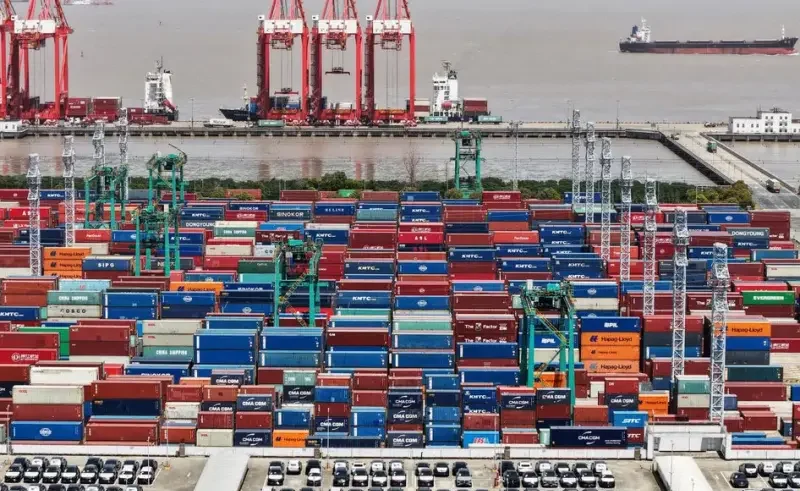
China’s export engine gathered speed in September, as shipments abroad jumped 36.3% from a year earlier, marking their strongest growth since February. The surge in China’s export growth in September beat market expectations and accelerated from 25.0% in August, according to Chinese customs data reported by Reuters. Analysts surveyed by Reuters had expected a 25.5% rise. Imports also grew faster, suggesting that trade activity remained strong even as China continued to face weak demand at home.
Technology and cars power the surge
High-tech goods and vehicles were the largest contributors to the surge. Semiconductor exports grew by 108.1% in value during the first nine months of this year compared to the same period last year, and exports of automatic data processing equipment and parts were up 54.6% year on year. Demand for Chinese electric and hybrid vehicles helped exports of cars rise 54.3%. This is the power of artificial intelligence (AI) infrastructure, chips, computing equipment and green technology helping Chinese manufacturers to sell to the world.
Trade surplus moves closer to $1 trillion
China’s trade surplus grew for a second consecutive month to $133.53 billion in September, from $119.1 billion in August. The surplus for the first nine months increased to $938.11 billion, and if China exports continue at present levels, it will soon hit the $1 trillion mark. The nation posted a $1.189 trillion surplus during the 12-month period ending in 2025, Reuters reported.
September surplus with the United States: $34.01 billion.September surplus with the European Union: $34.8 billion. September imports were up 31.0%, faster than economists predicted at 24.5% and the 28.2% increase in August. Trade on both sides increased but exports increased at a higher rate than imports, and the trade deficit increased.
Strong exports, but risks remain
The strong figures offer support to China’s economy, but also show its reliance on overseas customers. Domestic consumption and investment have been slow, in part because of a property-sector slowdown that has been in effect for a long time, the Associated Press noted. Meanwhile, Europe and the United States are wary of trade deficits and China’s manufacturing prowess. Additional restrictions on trade are a threat to auto imports, and an EU decision to cap imports of hybrid cars from China could have an impact over time.
Uncertainties in the outside world like geopolitical conflicts may impact trade, but there is hope for the continuation of exports and imports in the fourth quarter, Chinese customs officials told Reuters. For now, strong global demand for semiconductors and green technology products is keeping factories busy. How long the momentum will hold will depend on global technology spending and open markets and China’s capacity to boost domestic demand. Factory lines might be busy as a result of robust export orders, but international obstacles could turn things around very quickly.
Recommended Reads
How Are China and Russia Reshaping Global Energy Ties?
How Is China’s Manufacturing Rise Affecting Europe?
Why Is China–Taiwan Rivalry Reaching Pacific Forums?
Where Are Chinese Travellers Going This Autumn?
What Does a 101-Year-Old Chinese Man Eat and Drink?