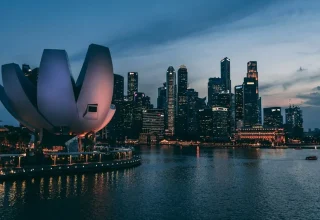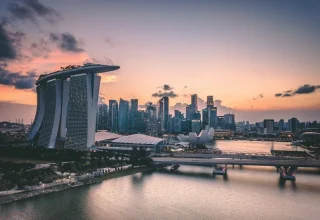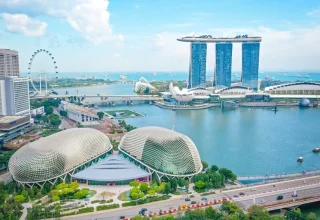


Graduate student Zayn Zhang, like many wealthy Chinese, believes that Singapore may be a great place to park his family’s fortune.
His wife is searching for a $4 million to $5 million (S$5 million to S$7 million) penthouse while he studies at a university in the Asian financial capital in hopes of obtaining permanent residency.
“Singapore is wonderful. It is stable and offers several investment possibilities, Zhang told Reuters late last year at a business and philanthropy gathering in Beijing.” He stated that his family may open a Singapore family office to handle their fortune in the future.
The summit at Singapore’s Shangri-La hotel was attended by hundreds of affluent individuals, many of whom were clad in Hermes belt buckles, monogrammed Gucci shawls, and the newest Dior handbags. Discussions on issues such as family wealth and sustainable investment were held. Several Chinese participants reported that they had just migrated to Singapore or were considering doing so.
Singapore has traditionally been a shelter for ultra-wealthy foreigners due to its tax-friendly policy and perception as a politically stable nation.
Since 2021, when it became one of the first Asian cities to dramatically remove pandemic restrictions and as many Chinese grew disillusioned with their country’s stringent COVID rules, it has experienced a new infusion of riches.
This disillusionment motivated Zhang, who earned Hong Kong residence in 2021, to investigate Singapore.
“Over time, we just lost our patience,” he remarked, referring to the lengthy quarantines he had to through while flying between Hong Kong and mainland China. He noted that the political crisis in Hong Kong was particularly discouraging.
From 400 in 2021 to around 700 in 2021, the number of family offices in Singapore that manage investments, taxes, asset transfer, and other financial concerns for the ultra-wealthy.
The renowned vacuum cleaner manufacturer James Dyson, hedge fund investor Ray Dalio, and Zhang Yong, creator of China’s Haidilao hotpot restaurant chain, all established family offices in Singapore.
Keep Reading



Despite the lack of more recent data, industry insiders report that demand in family offices increased in 2022 and is projected to continue unabated this year. It is not anticipated that China’s abandonment of zero-COVID policy would alter the trend, given the anxiety among the country’s wealthy over President Xi Jinping’s common prosperity initiative, which aims to alleviate inequality, they noted.
Late in 2022, Chung Ting Fai, an attorney who assists in establishing family offices, reported receiving one request per week from individuals desiring to transfer at least $20 million into Singapore. In January of this year, he received twice as many questions as he did in January 2021, when he received around one enquiry per month.
In addition to Chinese potential consumers, questions also came from Japanese and Malaysian parents seeking permanent residency for their children, he added.
Under Singapore’s government-administered global investor program, those who invest at least S$2.5 million in a firm, fund, or family office are eligible to seek for permanent citizenship.
Grace Tang, executive director of Phillip Private Equity, which administers one of two global investor program funds in Singapore, reported that her first month of the new year was loaded with meetings with possible investors, the majority of whom were Chinese.
She stated that while some are establishing family offices, others are establishing corporate headquarters in Singapore or investing in Singapore-domiciled funds.
Singapore’s assets under management increased 16% in 2021, the most recent year for which data is available, to S$5.4 trillion. More over three-quarters of that came from outside Singapore, with less than one-third coming from other Asia-Pacific nations.
The flood of riches is part of a larger trend of expats returning to Singapore, which began during the epidemic. Last year, the city’s population increased by 300,00 permanent residents and 97,000 foreigners on work or other long-term visas, bringing the total to 5.64 million.
In the first nine months of last year, new construction in Singapore caused a 21% increase in rentals. Over the previous two years, home prices have also increased, with mainland Chinese buyers remaining the leading international purchasers of pricey private houses.
Increasing golf club memberships is a further indication of the influx of private wealth. Singolf Services, a club membership brokerage, reports that the cost of membership at Singapore’s elite Sentosa Golf Club for foreigners has surpassed S$880,000, more than double 2019 levels.
Desmond Teo, Asia Pacific family enterprise head at the consultancy company EY, stated that capital inflows boost Singapore’s financial services industry and startups, hence creating a “rich ecosystem” that makes the nation more appealing to new investors.