
Japan is in talks with Malaysia to store captured carbon dioxide in underground storage in Malaysia in an effort to tackle climate change. Officials of both countries, from Japan Organization for Metals and Energy Security (JOGMEC) and Petronas, Malaysia’s state oil firm, signed a memorandum of cooperation on Wednesday.
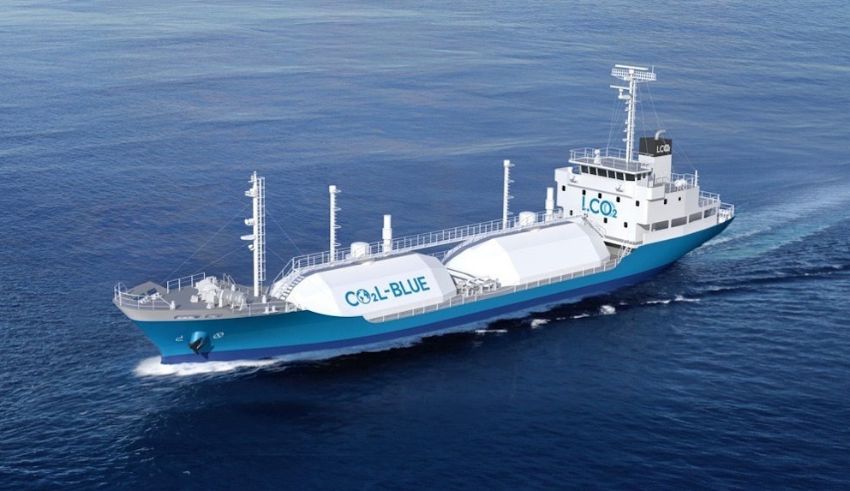
Japan aims to commence the shipment of CO2 to Malaysia from 2028. Norihiko Saeki, director of Japan’s Ministry of Economy, Trade and Industry, said they haven’t established any target for how much CO2 to be transported.
He highlighted the need for a regulatory framework to enable private companies to make an investment decision on Carbon Capture Storage (CCS).
What is Carbon Capture Storage?
Carbon Capture Storage is one of the ways in which countries can reduce emissions. It involves capturing CO2 at emission sources, transporting and then storing or buying it in a suitable deep, underground location. Experts say CCS is the removal of CO2 directly or indirectly from the atmosphere.
Carbon emissions can be captured from power plants, natural gas processing facilities and industrial processes and plants. According to the London School of Economics, carbon capture, usage and storage (CCUS) will help meet the crucial global climate targets. Experts say once the CO2 is separated, the remaining hydrogen-rich mixture can be used as fuel.
Keep Reading



Hundreds of Carbon Capture Projects Around the World
Fatih Birol, executive director of the International Energy Agency, said there are more than 500 CCUS projects globally. However, these projects are not enough. More needs to be done. Birol believes all these projects would make only about one third of what we would like to see.
The IEA says there are clear signs that CCUS is gaining traction, with more plans to build new ones and increased policy ambition and action. It highlighted that the coming decade will be critical to scaling up investment in developing and deploying CCUS and realizing its potential to contribute to the achievement of net-zero emissions.
Likewise, Japan is promoting capturing and storing of CO2 deep underground. This will help achieve net-zero emissions because the use of renewable energy will not alone offset CO2 emissions from industrial activities.