
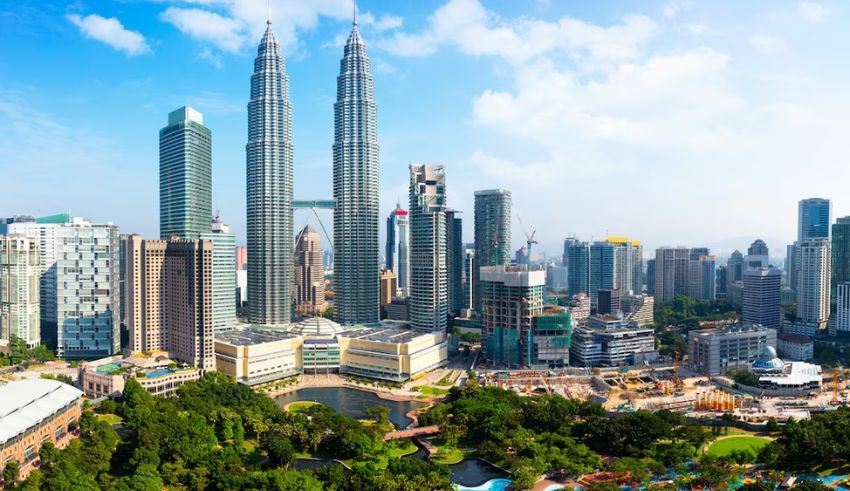
Malaysia is a Southeast Asian country with a population of about 32 million and a GDP of about $365 billion. The country is known for its rich natural resources, such as oil, gas, palm oil, and rubber, as well as its diverse and multicultural society.
The country has been a member of the Association of Southeast Asian Nations (ASEAN) since 1967, and has been one of the fastest growing economies in the region for decades.
The Problem
However, in recent years, Malaysia’s economic performance has been lagging behind its ASEAN peers, such as Vietnam, Indonesia, and the Philippines. According to the World Bank, Malaysia’s GDP growth rate was 4.3% in 2019, lower than the ASEAN average of 4.8%, and the lowest among the major ASEAN economies.
In 2020, due to the impact of the COVID-19 pandemic, Malaysia’s GDP contracted by 5.6%, the worst among the ASEAN countries. In 2021, the World Bank projected that Malaysia’s GDP will grow by 6%, lower than the ASEAN average of 6.2%, and the second lowest among the major ASEAN economies.
Some of the factors that have contributed to Malaysia’s economic slowdown are:
Malaysia has been facing a series of political crises and changes since the 2018 general election, which ended the 61-year rule of the Barisan Nasional coalition. Since then, the country has seen three different prime ministers, several defections and reshuffles of the ruling coalition, and multiple attempts of no-confidence motions and snap elections. The political turmoil has undermined the policy continuity and credibility of the government, and has distracted the attention and resources from addressing the economic and social challenges.
Keep Reading


Malaysia has been struggling to overcome some of the structural weaknesses and vulnerabilities of its economy, such as the dependence on commodity exports, the low productivity and innovation, the high public debt and fiscal deficit, the inequality and poverty, and the environmental degradation. These issues have hampered the country’s competitiveness and resilience, and have exposed the country to external shocks and risks.
Malaysia has been facing increasing challenges and competition from the regional and global environment, such as the trade tensions and protectionism, the digital transformation and disruption, the climate change and natural disasters, and the geopolitical conflicts and security threats. These factors have affected the country’s trade and investment flows, its market access and opportunities, its technology and infrastructure development, and its regional and international cooperation and integration.
The Outlook
Malaysia’s economic outlook remains uncertain and challenging, as the country continues to grapple with the COVID-19 pandemic and its aftermath, the political instability and uncertainty, and the structural weaknesses and vulnerabilities. The country needs to implement urgent and comprehensive reforms and measures to address the health and economic crises, to restore the political stability and confidence, and to enhance the structural competitiveness and resilience.
The country also needs to leverage its strengths and potentials, such as its human capital, its natural resources, its cultural diversity, and its strategic location, to seize the opportunities and benefits from the regional and global developments, such as the ASEAN Economic Community, the Regional Comprehensive Economic Partnership, the Belt and Road Initiative, and the Indo-Pacific Strategy.