









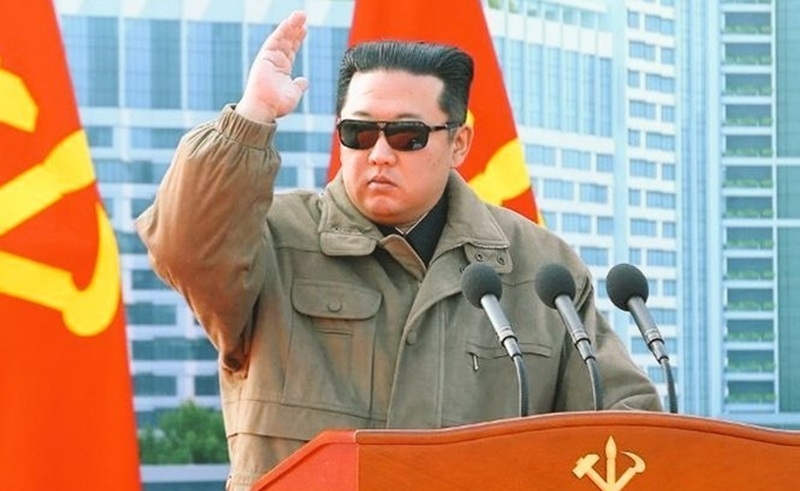
North Korea is paying lip service to the rule of centrality in ASEAN, while objecting to the growing security alliance buildup in the Indo-Pacific led by the United States. The assertion was made by the Korean Central News Agency after the 59th ASEAN Foreign Ministers‘ Meeting (ASEAN MIM) and 33rd ASEAN Regional Forum (ARF) in the Malaysian capital, Kuala Lumpur, on which Pyongyang has made every effort to appear.
Why Is North Korea Supporting ASEAN Centrality?
In its comments, North Korea affirmed ASEAN’s principles of sovereign equality, mutual respect, and non-interference into the internal affairs of nations which have been upheld for years. The ASEAN Way, the principles around it, have been a hallmark of how diplomacy is done in ASEAN these past decades.
Pyongyang highlighted its agreements with these values and spoke about support for the autonomy and dialogue in the region, in which Southeast Asia is to be free of any foreign geopolitical competition.
Criticism of US-Led Security Alliances
One such point in the statement was protests against the U.S. and its associates “racially spreading their security encroachment” in the area. Pyongyang said the group should not be “a forum to condemn a specific Member State or develop military competition.
The United States, Japan and South Korea had all urged North Korea to give up its nuclear armaments initiative, to which the commentary also objected. It repeatedly argued the country is a nuclear nation and called on others to avoid any pressure by requesting it to denuclearize.
Diplomatic Strategy Behind the Statement
However, North Korea this year did not attend this year’s meet of the 27 nations at the ASEAN Regional Forum, though it has observer status. Pyongyang’s overall diplomatic posture, which aims to keep the peace through public communication while forging new bilateral ties with its interlocutors like China, Russia, is underlined here.
Meanwhile, using ASEAN’s neutral principle, North Korea can offer itself up as friendly toward multilateral efforts and push Southeast Asian countries to take an independent stance on regional security matters.
Stay Updated On ASEAN Moves
What Happened At Manila Talks?
Check out the key trade discussions.
Why Are Ministers Meeting Now?
Find the latest regional priorities.
What’s Inside ASEAN-US Work Plan?
Uncover the new five-year roadmap.
Which ASEAN Industries Are Booming?
Explore the fastest-growing business sectors.
Ready For ASEAN Travel Changes?
Browse the latest visa requirements.
What Does This Mean for Regional Diplomacy?
While advocating dialogue and peace in the region, ASEAN is still balancing relations with big powers involved. ASEAN’s commitment to the centrality of the organization for the future of diplomacy in the Indo-Pacific region has been further strengthened with North Korea’s support for the role.
This rhetoric, however, is yet to hold up onto deeper engagement. But the declaration indicates that ASEAN is still a significant forum of diplomacy which stirs more than one narrative on the region.
FAQs
What does it mean for ASEAN to be central?
The concept of ASEAN centrality is that ASEAN is the hub of regional cooperation and dialogue, fostering consensus, neutrality and peaceful engagement among its members and partners.
Why does North Korea need to play an active role in the AEC?
North Korea affirmed the principles of ASEAN such as “sovereignty,” “mutual respect,” and “non-interference” as key pillars of area diplomacy and of separating ASEAN from the influence of outside powers.
Is North Korea a member of ASEAN?
No. North Korea is not an ASEAN member state, however, it is an ASEAN dialogue partner to the ASEAN Regional Forum (ARF) which involves ASEAN and dialogue members to discuss regional security issues.