

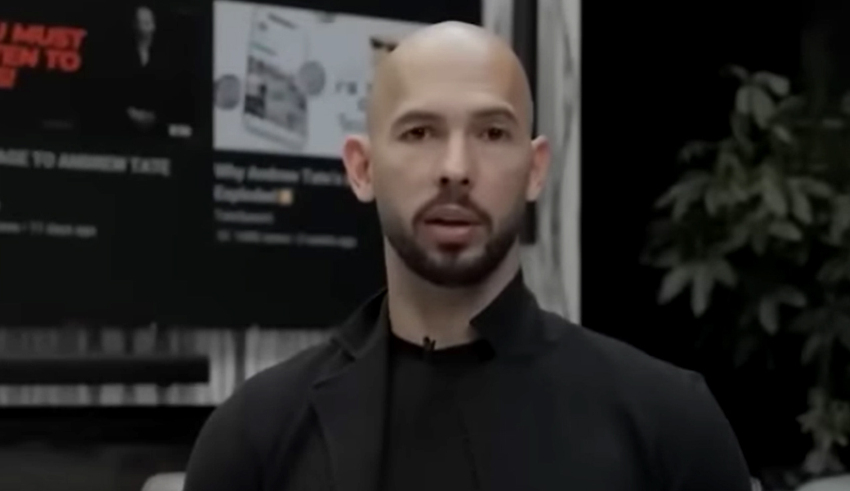
Andrew Tate has earned his life via controversies. Since his arrest in Romania on allegations of rape, human trafficking, and organized crime, substantial media attention has mostly highlighted his sexist beliefs.
This is significant, as he is a literal influencer. Tate has seen a meteoric climb to worldwide recognition and a viral reach that most of his colleagues can only imagine, despite being banned from several platforms.
His aim has been to persuade his fans to repost his articles in order to expand his audience. According to a criminologist, this is “incendiary content exchange.”
As a result, he has built a fortune from the billions of views on his films and memberships to his Hustlers University, where men and boys pay for advice on how to become wealthy. The fact that he frequently characterizes himself as a “high-net-worth individual” contributes directly to the content’s attractiveness. Uncertain as to how much money he truly has, he convinces disaffected boys and men that if they follow his advice, they, too, would become wealthy, ripped, and in charge.
Tate’s replies to allegations of misogyny and sexism are variable. Declaring his love for women, he has alternatively agreed, deflected – alright, he says, call me that, I don’t care – and denied. He has also alleged that he uses an online character to express his opinions.
Whether he realizes it or not, research indicates that everything Tate is selling, from the language he uses to describe women to his stances on sexual assault, partner control, and a woman’s value, is consistent with these labels. And the underlying risk of the word “influencer,” however true it may be, is that it essentially legitimizes the notion that such sexist content is something to be marketed, just as another social media influencer may “sell” a vacation or “promote” a fashion business.
Keep Reading



In his 2012 book, Networks of Outrage and Hope, the Spanish sociologist Manuel Castells demonstrated how the internet has given people like Tate enormous appeal and influence. However, these concepts are not novel. Tate’s philosophy is only the most recent example of “popular sexism,” as communications researcher Sara Banet-Weiser describes it. According to research, every instance of feminist advancement has been followed by a backlash from those who believe their privileges are being eroded.
This is significant since violence against women persists. In their lives, about 736 million women are subjected to physical or sexual assault by an intimate relationship or sexual violence by a non-partner. In the previous decade, this proportion has stayed basically stable.
Sexual harassment, street harassment, and other unwelcome sexual behavior and approaches affect far more women than males. However, as British academic Liz Kelly has demonstrated for decades, there is a link between these seemingly innocuous, everyday intrusions into women’s sexual liberty and the rarer, but unquestionably more serious events of rape and sexual assault.
In her 1987 book, Women, Violence, and Social Control, Kelly emphasized what she refers to as “the continuum of sexual violence.” She explains that sexism, sexual harassment, and sexual assault are not distinct behaviors. Micro-sexisms (misogynistic statements, for instance) are so prevalent that they have become the standard. This in turn leads to the justification or condoning of sexual assault and harassment.
As noted by specialists on gendered violence Michael Flood and Stephen Burrell, male sexual violence is the inevitable result of a culture in which boys adopt a notion of manhood based on sexism and gender inequality as they grow up.
Tate’s admirers defend him by referencing his videos titled “Why women are the most valuable thing” and “Why women are the most beautiful thing.” However, these movies propagate the stereotypes that women’s primary value lies in their appearance and sexual availability, and that they require protection and control from males.
Tate is relying on the very restricted notion, lauded in the broader, dominant western society, that male success is characterized by physical prowess, sports cars, money, and the ability to exert power over women. And he wields the enormous, monetarily-motivated power he has on young men, in particular, with an apparent indifference for the detrimental behaviors that science has long demonstrated may result from such attitudes.