

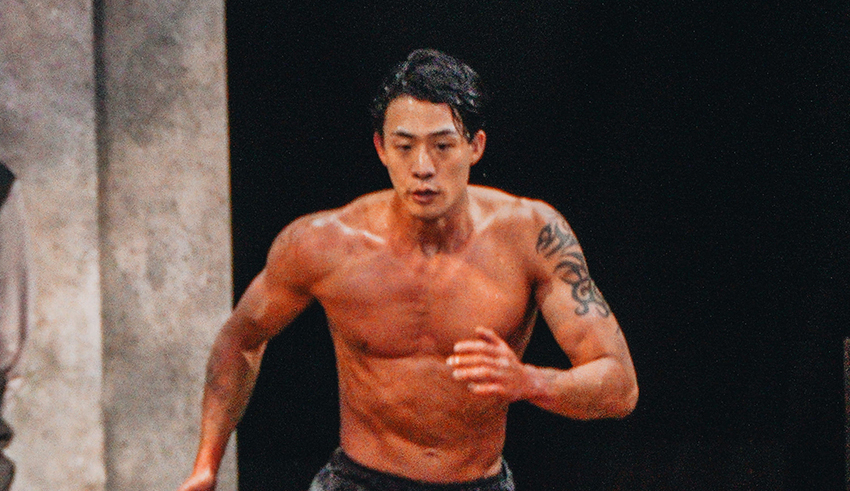
Physical: 100, South Korea’s latest Netflix blockbuster, looks to be greatly influenced by the cultural phenomenon Squid Game.
As with the imaginary Squid Game, the series is a variation on the survival game, a common reality TV genre, and the winner of the final game will get a substantial prize. Yet, this prize is not an inconceivable amount (ultimately about $35 million in Squid Game), but a relatively modest $250,000 – and, more significantly, it does not expand as players are brutally eliminated.
The premise of the series is that 100 individuals with a shared interest in sports or physical fitness are invited to participate in a series of missions. They come from a variety of backgrounds, are both male and female, have a wide range of body types and shapes, and range in age from 20 to 50.
The purpose of the competition is to identify the one with the best physicality, a vague concept that does not necessarily mean the strongest, quickest, or most attractive, as some contestants believe.
This broad premise helps to the success of the series, which, within two weeks of its premiere, climbed to the top of Netflix’s global ranking, becoming the first Korean reality series to do so.
Intentional references to Squid Game do suggest a comparison between the two shows beyond the fact that they are both on Netflix and from South Korea. The physical architecture of the environment, the anonymity of the show’s staff, and the fifty percent elimination rate in the first three tasks are all appropriate analogies.
In Physical: 100, however, the dominant topic is the human potential for endurance, and any physical aggression in one-on-one contests is part of the sport and not intended to be cruel.
A notable difference from Squid Game is the greater and more active role allotted to women, who are shown through a variety of physical occupations, such as boxers, bodybuilders, and fitness models, and varied body types. In comparison to the diminutive fitness YouTuber Shim Eu-ddeum, wrestlers such as Jang Eun-sil have bulkier frames and more developed muscle mass. These women are a long cry from the exploitative or selfless roles allocated to women in Squid Game.
Keep Reading



Using an internal audience is a second strategy. Physical: 100’s internal audience, in contrast to Squid Game’s audience of cold-blooded capitalists, comprises of the other contestants, who cheer and show respect for the talents and creativity of their fellow competitors.
The contestants’ solidarity extends to the one-on-one “death match” competitions, when players routinely display humility in defeat and vow they will now assist the successful opponent, or they express charity in triumph. Even during a game, they will acknowledge a good play, such as when rugby player Jang Seong-min, after being repeatedly pushed to the ground by a female wrestler, gets himself up and flashes her a grateful smile.
Aged competitors, such as Mixed Martial Arts boxer Choo Sung-hoon (47), are shown special regard. Younger Shin Don-guk (41) challenges him to demonstrate this honor; after he loses, Shin kneels in front of Choo and touches his forehead to the ground.
In contrast to Squid Game, in which typical children’s activities were given a sinister twist to produce the tasks, Physical: 100 used a classical Greek framework. This echoes the Greeks’ admiration for the perfect figure and athletic achievement. As a result, the focus is not on the hardships endured by the participants in the past, but on the powers and beauties of the human body.
Although the competition is purportedly to find the body with the strongest physique, the series consistently demonstrates that no two bodies are identical and each is attractive in its own unique way.
The play begins in an auditorium filled with plaster torsos arranged in concentric circles. These are casts of the 100 contestants who begin the competition. One of the freshly admitted players says, “It’s like entering a Greek temple” to ensure that the audience is appropriately prompted. The site is emphasized with a sculpture of Artemis, the Greek goddess of hunting, whose bow is instantly recognizable.
Whereas participants in Squid Game are typically portrayed as hopeless, those in Physical: 100 have greater control over their life due to their ability to mold their own bodies or learn specific abilities, or both.
Physical characteristics function in various ways, therefore simply strength is frequently insufficient. In Quest 2, Sand Moving, for instance, varied abilities are crucial to the outcomes of battles between teams (Episodes 4–5). This sequence is comparable to the Tug of War scene in Squid Game due to its depiction of underdog victory.
According to one rival, “if you did your best, you must accept the outcome.” Herein lies a potentially significant contrast with Squid Game: competitors battle for big stakes and frequently have large egos, yet they elicit viewer empathy by accepting their limitations and demonstrating their shared humanity.
To be human is to accept failure with accomplishment, and this is likely the sharpest condemnation of Squid Game’s pessimism in the series.
Also Read:- Report: Chelsea Women 2 Arsenal Women 0