
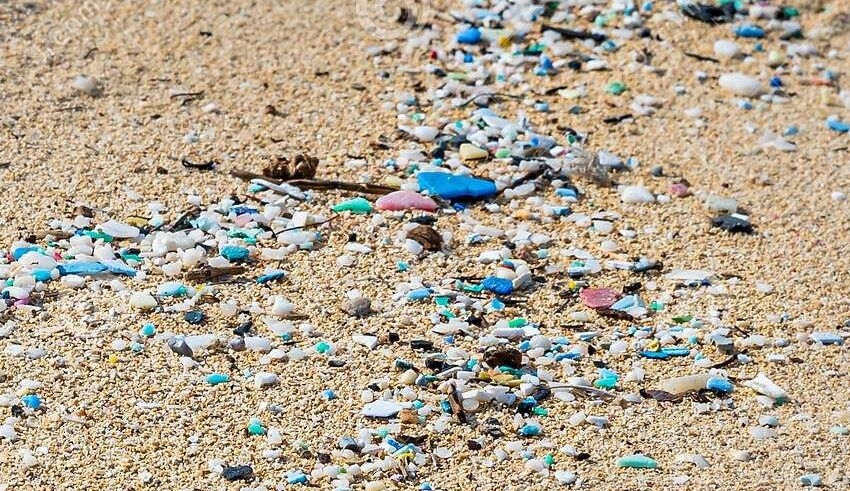
Microplastics are nearly ubiquitous and difficult to avoid, a researcher argues, but there are tiny methods to limit your use in everyday life.
Former consulting scientist at the Women’s and Children’s Hospital and researcher in microplastics and chemicals Alfred Poulos says contaminants such as microplastics exist in the air, water and even food we ingest.
Microplastics or microfibres are pollutants created by the breakdown of plastics or release from textiles.
Professor Poulos stated, “My basic concept has been that while non-toxic concentrations of toxins and pollutants do not kill you, the problem is that we are exposed for many, many years.”
Professor Poulos says drinking water is influenced by microplastics and other pollutants.
“There’s no question that there are microplastics in water. It is really challenging to do anything about it. “Plastics can enter the reservoir,” he explained.
“We drink water every day of our life … and we don’t know what the long-term consequence is.”
SA Water denied an interview request but issued a statement on its 43 water treatment facilities in South Australia.
The World Health Organization does not propose systematic monitoring for microplastics in drinking water, according to the statement.
Keep Reading



“To safeguard public health, regulators must continue to prioritize the eradication of microbiological diseases and pollutants.”
There are a few simple activities to limit the intake of microplastics, Professor Poulos added.
“When I buy oil these days — and I’ve been doing this for years — I make sure I buy it in a glass bottle.”
Professor Poulos advises individuals to avoid cooking meals in plastic containers in the microwave and drinking from plastic water bottles.
He stated, “I would never drink water from a plastic container.”
“There is no possible doubt… There are plastic residues in the water.”
Professor Poulos asserts that making a concerted effort to avoid plastic purchases will aid in reducing consumption.
“What my wife and I try to do, if we use plastic, is reuse the same bag as long as it’s not contaminated,” he added.
Efforts to produce energy in a manner that does not contaminate the environment are a first step towards lowering the amount of chemicals and plastic in the atmosphere, according to Professor Poulos.
A recent research from Flinders University revealed the presence of plastic contamination in eight freshwater streams that flow into the Gulf of St. Vincent.
Microplastics were identified in water samples from seven key catchment regions in metropolitan Adelaide, according to study leader Sophie Leterme.
There were between 1.2 and 30 microplastic particles per liter in the Onkaparinga River, Pedler Creek, Christie Creek, Field River, Sturt River, Brown Hill Creek, and Torrens River catchments.