
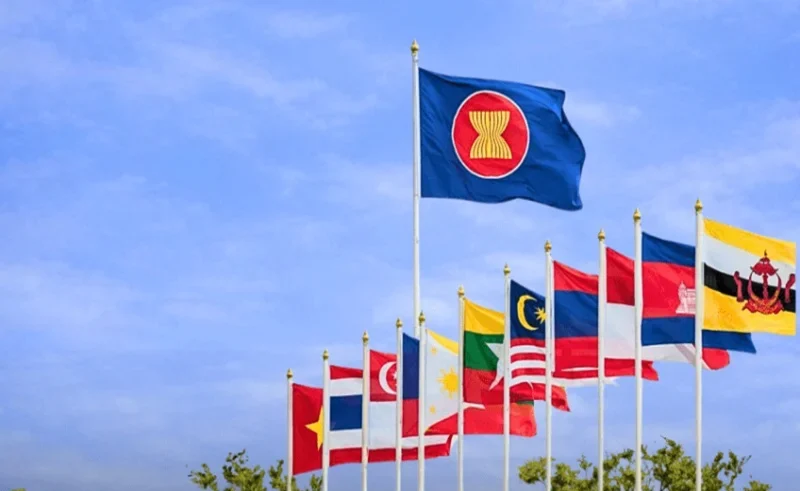
For more than five years, the ASEAN has been working on a political roadmap, the Five Point Consensus (5PC), to solve the political situation in Myanmar, but the region is still facing a lack of tangible results. It took 29 years for Myanmar’s ASEAN accession in July 2026, but tensions between ASEAN and Myanmar over implementation, and the impact of domestic political stakes, persist.
These recent developments show that ASEAN is trying to keep the dialogue alive, but not to regain the political stature of Myanmar. However, the fundamentals of the Five-Point Consensus have not yet been realized, nor has any progress been made in the negotiations, which are still in their early stages.
Five-Point Consensus
In April 2021, the leaders of ASEAN countries accepted the Five Point Consensus after the military took over power in Myanmar. It highlights five key commitments to restore stability, and these include, stopping violence immediately, holding inclusive dialogue with all stakeholders, providing humanitarian assistance via ASEAN Coordinating Centre for Humanitarian Assistance, as well as the unrestricted access for ASEAN Special Envoy to liaise with all involved.
At the same time, ASEAN has again highlighted the 5PC as its only formal mechanism to address the situation in Myanmar, even as there have been numerous problems to fully realize the commitments and obligations of this mechanism.
ASEAN’s Strategy of Limited Engagement
ASEAN has not taken a stance of complete isolation on Myanmar, instead it has introduced a so-called “selective engagement”. Myanmar was represented at the 59th ASEAN Foreign Ministers’ Meeting in Manila by non-political members of ASEAN, especially the permanent secretaries.
Thailand also early this July acknowledged the three informal meetings of the ASEAN foreign ministers and Myanmar’s Tin Maung Swe in Bangkok. ASEAN’s delicate balancing act was demonstrated by the direct talk held during the meeting that did not result in formal political recognition of Myanmar’s military leadership.
Why Does the Diplomatic Deadlock Continue?
But the primary challenge is the divergent views on the implementation of 10 points One Perspective from the community. Strong expectations for meaningful progress lie in ending violence, inclusive political dialogue and access to all stakeholders including former State Counsellor Daw Aung San Suu Kyi who is currently detained.
What Myanmar’s government claims is that elements in the framework don’t capture the country’s political realities these days. The government has called into question the measures mandated for dialogue with opposition movements like the National Unity Government and stated that the provision runs counter to national sovereignty and national security concerns.
Explore the latest ASEAN developments and opportunities.
How Will Tariffs Affect ASEAN Exports?
Check out the industries facing the biggest trade shifts.
Why Is Panama Joining ASEAN Talks?
Discover how new partnerships could reshape regional cooperation.
What Happened At Manila Summit?
Find the biggest outcomes from the ASEAN ministers’ meeting.
Which ASEAN Industries Are Booming?
Uncover the fastest-growing sectors creating fresh opportunities.
Are ASEAN Travel Rules Changing?
See the latest visa updates for international visitors.
Different Priorities Within ASEAN
The ASEAN consensus-based decision-making also poses difficulties in presenting a single strategy. Singapore, Indonesia and the Philippines are yet to let Myanmar to attend any regional meeting without first observing the Five-Point Consensus.
Other countries, such as Thailand, have emphasized bilateral interactions that are informal, ways to deal with issues at the border such as refugee returns, cooperation in security and humanitarian matters, etc. These divergent policies have slowed down the concerted decision-making process and maintained the flow of communication.
FAQs
Which of the following is not a part of the ASEAN Five-Point Consensus?
The ASEAN diplomatic effort, finalised in April 2021, on peaceful resolution of Myanmar known as the Five-Point Consensus, including modalities for mediation by an ASEAN Special Envoy, end of violence, enabling humanitarian access and dialogue.
Why do the efforts under the Five-Point Consensus fail?
Unfortunately, there has been some disagreement between ASEAN and Myanmar regarding the use of the framework, especially on issues of engaging with political opposition and access to political leaders who are detained, which has slowed the framework’s operation.
What are the reasons for restricting political representation in ASEAN for Myanmar?
ASEAN limits the access of Myanmar’s highest-ranking political officials to senior-level meetings in response to low levels of progress towards implementing the Five-Point Consensus, while continuing to maintain a level of diplomatic engagement via the medium of civil servants.